Specialist Package Management Across Complex Process Energy and Power Infrastructure
Sector: Oil & Gas / Petrochemical / Power & Energy Infrastructure
Client: Confidential
Location: Europe
Project Value: Confidential
Asteria International Services: M&E Package Management | EC&I Package Management
Project Overview
Asteria International was engaged to provide specialist package management for the mechanical, electrical, control and instrumentation elements of a major process energy and power infrastructure programme within an operational refining environment.
The project was developed to increase the recovery and beneficial utilisation of residues arising from the refining process, integrating the recovered energy with steam-generation infrastructure and an offsite Combined Heat and Power (CHP) facility.
The CHP development introduced a further major interface with the wider electrical infrastructure, incorporating power generation and export capability to the national electricity network.
Asteria International managed the M&E and EC&I packages across these interconnected systems, coordinating engineering, procurement, contractor interfaces, programme, construction, commissioning and technical integration within a complex operational environment.
The Challenge
The project brought together process-energy recovery, steam generation, power generation and grid-connected electrical infrastructure within an established refining facility.
These systems could not be developed or delivered independently.
Changes and constraints within process and steam systems had the potential to influence CHP operation, while generation requirements created interfaces across electrical distribution, protection, controls, instrumentation and the external electricity network.
The project therefore contained significant dependencies between mechanical equipment, electrical infrastructure, instrumentation, control philosophy and process requirements.
Delivery also needed to recognise the constraints associated with introducing major new infrastructure into an operational process facility.
Within the M&E and EC&I scope, Asteria International’s role was to manage these package interfaces and maintain coordination between the specialist organisations responsible for their development and delivery.
Asteria International’s Appointment
Asteria International provided specialist package management across the mechanical, electrical, control and instrumentation scope.
The appointment included:
- M&E package management
- EC&I package management
- Engineering coordination and technical-interface management
- Client and project-team interfaces
- Package schedule development and progress management
- Contractor and specialist supplier management
- Procurement and technical-bid interfaces
- Technical deliverables management
- Mechanical equipment interfaces
- Steam-generation system interfaces
- CHP mechanical and electrical interfaces
- Electrical distribution and generation interfaces
- Grid-export interfaces
- Instrumentation and control-system coordination
- Protection and control interfaces
- Process and utility interfaces
- Construction coordination and constructability
- Technical change management
- Package risk and opportunity management
- Commissioning planning and coordination
- Interface management through testing and handover
The role required coordination across multiple specialist organisations and engineering disciplines while maintaining visibility of how decisions within the M&E and EC&I packages could affect other areas of the project.
Process Energy Recovery
A fundamental objective of the project was to improve utilisation of energy contained within residues arising from the refining process.
Rather than considering these streams solely as process by-products, the project incorporated infrastructure through which their available energy could be recovered and beneficially utilised.
This created important interfaces between the existing process facility and the new energy infrastructure.
Process conditions, energy availability, equipment requirements, controls, steam demand and operating philosophy needed to be considered as elements of an interconnected system.
From a package-management perspective, this meant that mechanical and EC&I systems could not simply be developed against isolated equipment specifications.
Their successful integration depended upon understanding how the individual systems interacted with the process, steam-generation infrastructure and wider energy systems.
Steam Generation & Integration
Steam generation formed an important part of the energy-recovery strategy.
New steam infrastructure needed to interface with both the process-energy recovery systems and the wider facility steam requirements.
Mechanical equipment, pipework, valves, instrumentation, control systems and associated utilities needed to operate as an integrated system capable of responding to changing process and energy conditions.
The steam systems also created important interfaces with the CHP development, where thermal and electrical generation formed interconnected elements of the project.
Asteria International coordinated the M&E and EC&I package interfaces across these systems, maintaining alignment between the relevant specialist organisations and the requirements of the wider project.
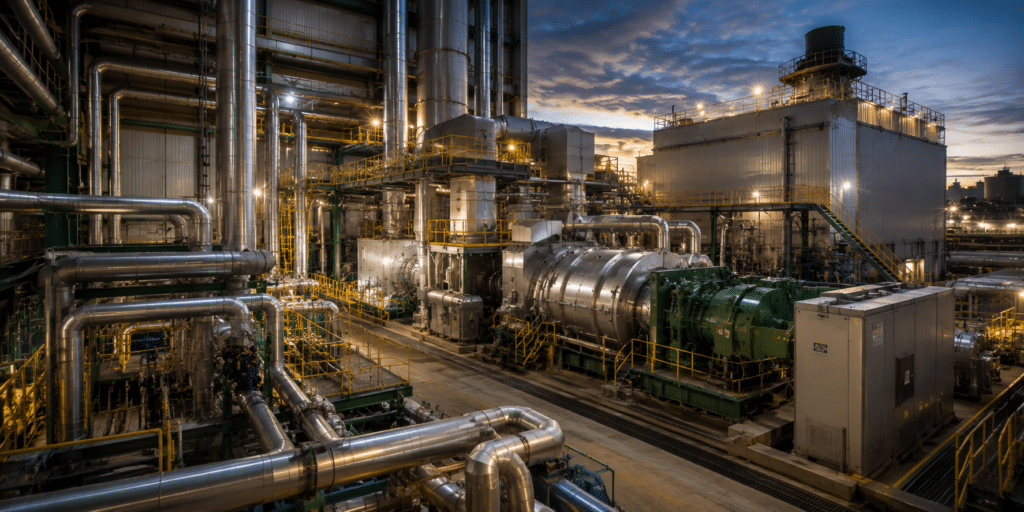
Combined Heat & Power Infrastructure
The offsite CHP facility represented another significant element of the project.
The development provided both thermal and electrical energy, creating interfaces between process-energy requirements, steam infrastructure, power generation and electrical distribution.
From an M&E and EC&I perspective, the CHP infrastructure required coordination across major mechanical equipment, auxiliary systems, electrical generation, distribution, controls, instrumentation and associated balance-of-plant systems.
The CHP facility could therefore not be considered entirely independently from the process facility, steam system and electrical infrastructure.
Asteria International provided package-management coordination across these interfaces, working with specialist engineering organisations, equipment suppliers, contractors and the wider project team.
Electrical Infrastructure & Grid Export
The electrical scope extended beyond supplying power to new process and mechanical equipment.
The introduction of generation created a relationship between the new infrastructure, the site’s electrical systems and the external electricity network.
Electrical requirements therefore included generation, distribution, protection, control, metering, synchronisation and interfaces associated with export of electricity to the national network.
Protection and control requirements were particularly important because generation needed to operate safely in relation to both the internal electrical infrastructure and the external network.
Within the EC&I package, Asteria International coordinated these interfaces with the relevant specialist organisations, maintaining alignment with mechanical systems, controls, construction and commissioning requirements.
EC&I Integration
Electrical, Control and Instrumentation represented a major integration requirement across the project.
Process-energy recovery, steam generation, CHP equipment and electrical export depended upon instrumentation and control systems capable of coordinating equipment operating across different parts of the infrastructure.
Instrumentation needed to provide appropriate information for safe and effective operation, while control systems needed to respond to changing process conditions, equipment status and energy demand.
Interfaces existed between package control systems, process systems, electrical protection, instrumentation, alarms, interlocks and the wider operational control philosophy.
Asteria International managed coordination across these EC&I package interfaces, helping maintain clarity of responsibilities and identify potential gaps between individual equipment and contractor packages.
Managing Package Interfaces
One of the principal challenges within the M&E and EC&I scope was management of the interfaces between individual systems and packages.
Mechanical equipment required electrical supplies. Electrical systems required protection and control. Control systems required instrumentation, while instrumentation requirements were determined by the process and equipment being monitored.
Commissioning ultimately required these different systems to operate together.
Asteria International maintained visibility of these dependencies throughout package development and delivery.
This required coordination between engineering disciplines, contractors, specialist suppliers and the wider project team so that changes or constraints within one package could be understood in terms of their potential consequences elsewhere.
Identifying these interfaces during engineering and construction helped reduce the risk of technical gaps emerging later during commissioning.
Engineering Management & Technical Coordination
Detailed engineering remained the responsibility of the relevant engineering disciplines, equipment manufacturers and specialist contractors.
Asteria International’s package-management role focused on coordinating engineering interfaces across the M&E and EC&I scope and maintaining alignment between technical development and the requirements of procurement, construction and commissioning.
Technical deliverables were considered within the context of their package and interface requirements rather than solely as individual documents.
Particular attention was required where responsibilities crossed contractual, equipment or discipline boundaries.
Equipment connections, electrical supplies, instrumentation requirements, control signals, utilities and commissioning responsibilities required clearly coordinated interfaces.
Asteria International provided package-management coordination across these areas as engineering progressed.
Procurement & Specialist Supplier Management
The M&E and EC&I scope involved multiple specialist equipment suppliers and contractors.
Procurement therefore needed to remain connected to engineering development.
Technical requirements, package boundaries, vendor information, interfaces and equipment-delivery requirements could all influence subsequent construction and commissioning activities.
Asteria International coordinated these relationships within the package-management role, maintaining visibility of supplier information and its interfaces with the wider engineering requirements.
Long-lead equipment and specialist systems also required consideration within package schedules so that procurement constraints and delivery requirements could be understood within the wider project.
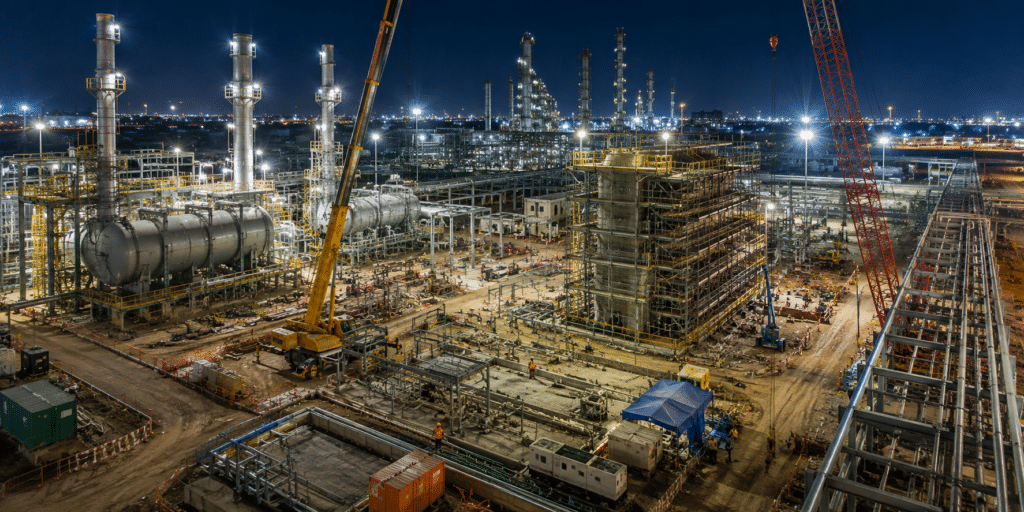
Construction Coordination
Transition from engineering into construction introduced further package interfaces.
Mechanical, electrical and EC&I activities needed to be coordinated within an operational process environment and alongside other project workstreams.
Installation sequencing, equipment access, existing infrastructure, temporary requirements and availability of preceding works could all influence package progress.
Asteria International coordinated contractors and specialist suppliers across the M&E and EC&I scope, maintaining visibility of these dependencies as installation progressed.
The package-management role focused on ensuring that mechanical, electrical and EC&I activities remained coordinated with one another and with the wider construction requirements of the project.
Health & Safety
Health and safety was an important consideration throughout package delivery within the operational refining environment.
Mechanical, electrical and EC&I activities involved multiple specialist contractors and interfaces with existing process and energy infrastructure.
Within the package-management role, Asteria International supported coordination of health and safety requirements alongside engineering, construction planning, contractor activities, access, installation sequencing, testing and commissioning.
Particular attention was required where package activities interfaced with operational plant, existing services and other construction work.
Health and safety considerations therefore remained connected to the practical planning and coordination of the M&E and EC&I packages throughout delivery.
Commissioning & Systems Integration
Commissioning represented the point at which the project’s technical interfaces ultimately needed to operate together.
Mechanical equipment, electrical systems, instrumentation, controls, protection, process interfaces, steam generation, CHP systems and external electrical interfaces all required coordinated testing and validation.
Asteria International’s package-management role extended into commissioning planning and coordination for the M&E and EC&I scope.
Commissioning requirements were considered alongside engineering and construction so that system boundaries, testing sequences, responsibilities, prerequisites and package interfaces could be understood before systems became available for testing.
Successful commissioning depended upon more than individual equipment operating correctly.
Mechanical, electrical and EC&I systems needed to function together within the wider process and energy infrastructure.
Package Planning & Project Controls
The M&E and EC&I packages contained significant dependencies across engineering, procurement, construction and commissioning.
Asteria International maintained oversight of package schedules, technical deliverables and key interfaces to provide visibility of progress and emerging constraints.
Engineering information influenced procurement. Procurement affected construction readiness. Construction sequencing influenced commissioning, while technical changes could affect several areas simultaneously.
Project controls within the package-management role therefore focused on these relationships rather than simply measuring completion of individual activities.
This supported earlier identification of constraints and provided greater visibility of the position of the M&E and EC&I scope within the wider project.
Package Risk & Opportunity Management
Risk and opportunity management formed part of the M&E and EC&I package-management role.
Particular attention was required at the interfaces between process systems, mechanical equipment, electrical infrastructure, controls, specialist suppliers, construction and commissioning.
Package and discipline boundaries can create risks where responsibilities, technical requirements or dependencies are not clearly coordinated.
Asteria International maintained visibility of these interface risks alongside engineering development, procurement, package schedules and construction.
Emerging technical issues, supplier constraints, construction dependencies and commissioning requirements could therefore be considered in terms of their potential effect on the M&E and EC&I packages and their interfaces with the wider project.
Opportunities for improved coordination, sequencing and technical integration were considered through the same package-management process.
Operational Integration & Handover
The new infrastructure was being introduced into an established operational refining environment.
Project and package decisions therefore needed to recognise operational requirements throughout engineering, construction and commissioning.
As systems progressed towards operation, Asteria International coordinated the M&E and EC&I interfaces associated with testing, outstanding technical matters, package completion and handover.
The focus remained on ensuring that package responsibilities and interfaces were appropriately coordinated as the infrastructure transitioned from construction and commissioning into operational use.
Project Outcome
The project brought together process-energy recovery, steam generation, CHP infrastructure, electrical generation and grid export within an established refining environment.
Asteria International provided specialist M&E and EC&I Package Management, coordinating engineering interfaces, procurement, contractors and specialist suppliers, package planning and project controls, risk and opportunity, construction interfaces and commissioning across the appointed scope.
The role provided continuity across the M&E and EC&I packages from engineering and procurement through construction, commissioning and handover, while the relevant specialist designers, equipment manufacturers and contractors retained responsibility for their respective technical and delivery scopes.
Integration across mechanical, electrical, instrumentation and control systems was particularly important because successful operation depended upon these packages functioning together within the wider process and energy infrastructure.
Integrated M&E & EC&I Package Management
Complex process and energy projects create dependencies that extend beyond individual equipment packages.
Mechanical systems depend upon electrical infrastructure. Electrical systems depend upon protection and controls. Instrumentation and controls depend upon the process and equipment requirements, while commissioning ultimately brings all of those interfaces together.
Effective package management maintains visibility across these boundaries throughout engineering, procurement, construction and commissioning.
Asteria International provides experienced M&E and EC&I package management, connecting specialist engineering, supplier, contractor, construction and commissioning interfaces within complex operational environments.
Complex Projects. Controlled Delivery.
Asteria International provides experienced project and package leadership across complex capital projects and specialist technical packages.
Our approach combines engineering coordination, commercial awareness, project controls, risk management, construction interfaces and commissioning coordination to support controlled delivery from engineering and procurement through construction, testing and handover.