From Feasibility & Cost Development Through Project Delivery & Operational Integration
Sector: Water & Wastewater / Power & Energy Infrastructure
Client: Confidential
Location: Multiple UK Locations
Contract Value: Confidential
Asteria International Services: Project Management | Engineering Management | Commercial Management | Construction Management | Project Controls & Risk Management
Project Overview
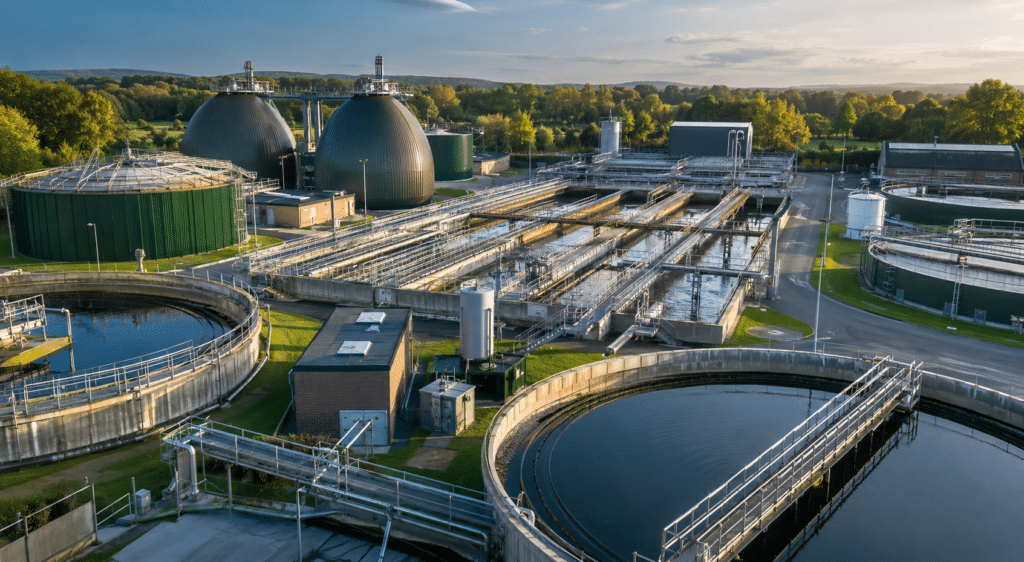
Asteria International was engaged on two separately awarded water and wastewater infrastructure projects at operational treatment facilities in the United Kingdom.
Each project was independently developed and delivered, with Asteria International’s involvement extending from early feasibility, option development and project costing through engineering coordination, procurement, construction, commissioning and operational integration.
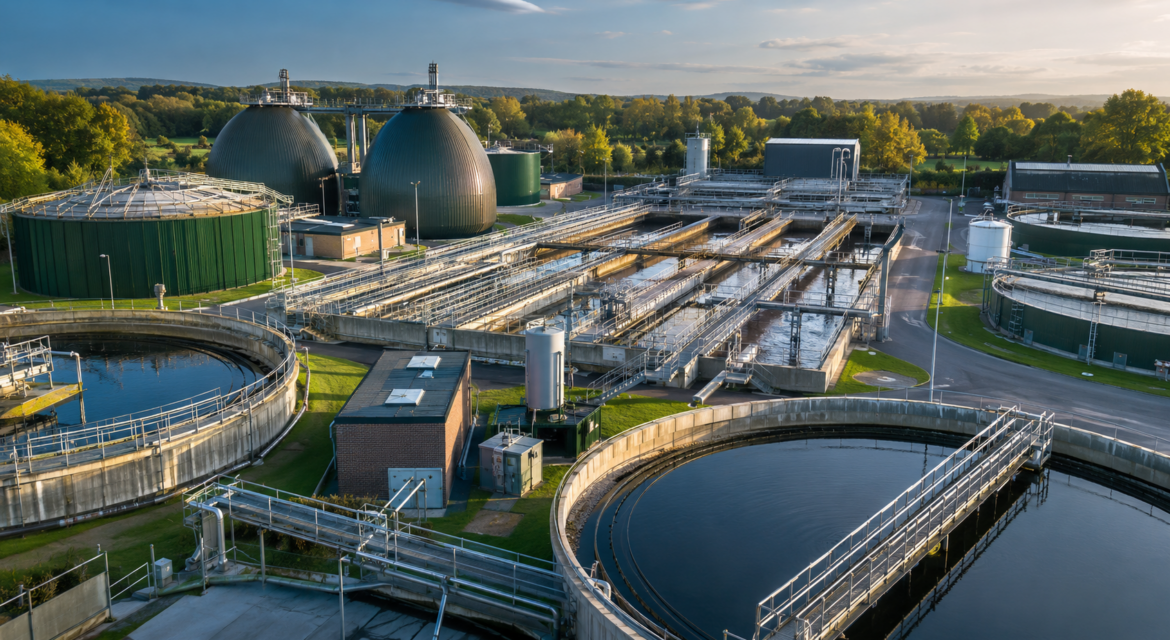
One project involved upgrades to existing anaerobic digestion and sludge-treatment infrastructure, with improvements focused on treatment performance, pathogen reduction, residual solids and the recovery and productive utilisation of biogas for renewable electricity generation.
The second project involved improvements to inlet treatment, screening, primary settlement and sludge-extraction infrastructure.
Although technically different, both projects required the same fundamental approach: understanding existing process performance, developing practical and commercially viable solutions, and then maintaining continuity as those solutions progressed into construction within operational treatment facilities.
Asteria International provided project leadership across the technical, commercial, construction, project-control, risk and operational interfaces while working alongside the client, specialist designers, contractors, suppliers and operational teams.
The Challenge
Both projects involved modification of existing treatment infrastructure that needed to remain operational throughout delivery.
Water and wastewater treatment processes are interconnected. Changes to one part of a system can influence downstream performance, while construction, shutdowns and commissioning need to be planned around continuing treatment requirements.
The anaerobic digestion project required improvements to existing sludge-treatment processes to enhance treatment effectiveness, increase pathogen reduction and reduce residual solids.
The project also incorporated improvements associated with biogas recovery and its productive use for renewable electricity generation, creating interfaces between the treatment process and energy infrastructure.
At the second site, existing inlet-treatment, screening, primary-settlement and sludge-extraction systems required improvement to enhance preliminary treatment, solids separation and sludge management.
The challenge on both projects was therefore broader than replacing individual items of equipment.
Solutions needed to be technically appropriate, commercially viable, constructable within existing facilities and capable of being introduced without compromising operational treatment requirements.
Feasibility, Option Development & Costing
Asteria International’s involvement began during the front-end development of each project.
Existing processes and infrastructure were evaluated to understand current performance, identify constraints and establish opportunities for improvement.
Potential interventions were considered against technical capability, compatibility with existing assets, constructability, operational consequences, project risk and anticipated capital cost.
Cost development formed an important part of the feasibility process.
As potential solutions developed, their implementation requirements and likely capital implications were considered alongside the technical assessment.
This allowed technical and commercial considerations to progress together and provided the client with greater visibility of what would be required to move each project into delivery.
Feasibility therefore established the basis for what needed to be done, how it could be implemented and the likely requirements for successful delivery.
From Feasibility to Project Delivery
Asteria International’s involvement continued as each project progressed from feasibility and cost development into physical implementation.
This continuity allowed assumptions, constraints, opportunities and risks identified during front-end development to remain visible as engineering, procurement and construction progressed.
Across the two separately awarded projects, the appointments incorporated:
- Feasibility and project-development management
- Existing-process and infrastructure evaluation
- Option development and assessment
- Project cost development
- Overall project leadership and delivery management
- Client and stakeholder interface management
- Engineering management and multidisciplinary coordination
- Project programme development, management and forecasting
- Project reporting and governance
- Commercial and contractual management
- Procurement and contractor management
- Contractor and specialist supplier coordination
- Project controls and performance management
- Project risk and opportunity management
- Health and safety leadership
- Construction management and site-delivery coordination
- Construction sequencing and logistics
- Existing-asset and process interfaces
- Shutdown and changeover planning
- Commissioning planning and coordination
- Operational integration and handover
- Project close-out
The technical scope differed between the two projects, but the delivery approach maintained the connection between feasibility, engineering, commercial management, construction and operation throughout each project lifecycle.
Anaerobic Digestion & Sludge Treatment
One of the projects involved upgrades to existing anaerobic-digestion and associated sludge-treatment infrastructure.
The works were developed to improve treatment effectiveness, enhance pathogen reduction and reduce the quantity of residual solids requiring subsequent management.
These changes required consideration of the complete treatment process rather than individual pieces of equipment.
Feed conditions, treatment performance, sludge movement and downstream processes could each influence overall system behaviour.
Asteria International coordinated the project and engineering interfaces associated with these modifications, working alongside the relevant specialist technical organisations while maintaining alignment with project schedule, commercial, construction, risk and operational requirements.
The objective was to implement improvements within the existing treatment facility while maintaining the continuing requirements of the operational process.
Biogas Recovery & Renewable Electricity Generation
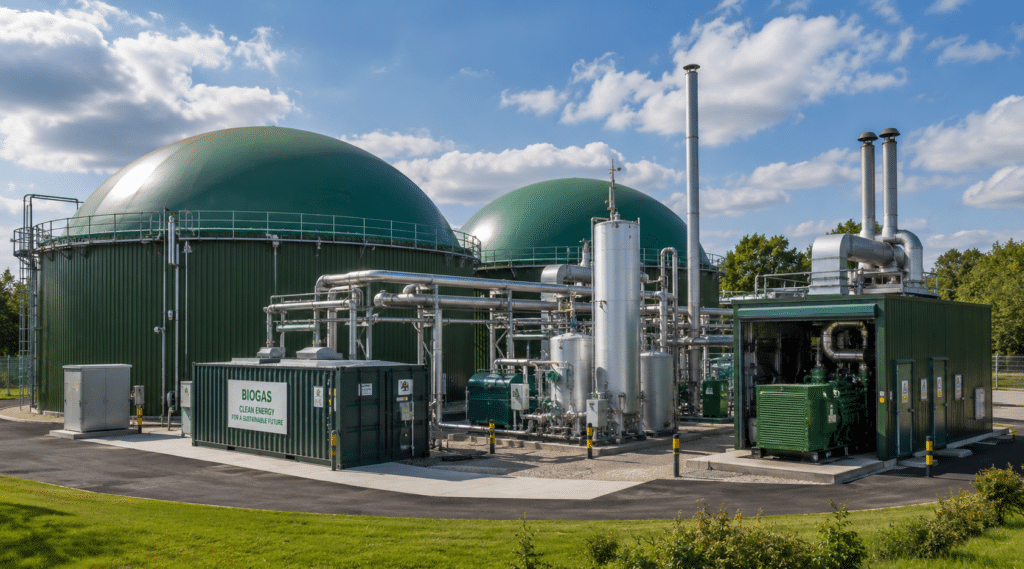
The anaerobic digestion process also provided an opportunity to improve recovery and productive utilisation of biogas.
Biogas generated through digestion represented a useful energy resource capable of supporting renewable electricity generation.
The project incorporated improvements associated with biogas recovery and utilisation, introducing additional interfaces between the wastewater-treatment process and associated energy infrastructure.
Biogas production, recovery, handling and utilisation needed to remain compatible with operation of the digestion process and the wider treatment facility.
Asteria International coordinated these project interfaces alongside the process, mechanical, electrical, controls, construction and operational requirements.
This connected improvements in treatment performance with the opportunity to make productive use of energy recovered from the wastewater-treatment process.
Inlet Treatment & Screening Infrastructure
The separately awarded project at the second site involved upgrades to existing inlet-treatment infrastructure.
Inlet works form one of the first stages of wastewater treatment and have an important role in protecting downstream equipment and supporting subsequent process performance.
Existing systems required enhancement to improve preliminary treatment and management of incoming solids.
Asteria International coordinated development and delivery of the project interfaces, bringing together engineering requirements, existing infrastructure, construction sequencing, commercial considerations and operational constraints.
Because the work was undertaken within an operational facility, implementation needed to maintain existing treatment capability while new and modified infrastructure was introduced.
Temporary arrangements, shutdown requirements, construction sequencing and commissioning therefore formed part of the project-delivery strategy.
Primary Settlement & Sludge Extraction
The second project also incorporated improvements to primary-settlement and associated sludge-extraction systems.
Effective primary settlement influences downstream treatment performance and the management of sludge generated through the process.
Improvements therefore needed to consider not simply the individual settlement assets but their relationship with sludge removal, downstream processes and existing operational infrastructure.
Asteria International coordinated these project interfaces while maintaining alignment between engineering development, construction requirements, project schedule, commercial considerations and operational priorities.
Sludge-extraction improvements supported more effective movement and management of settled solids within the treatment process.
The focus remained on improving the performance of the overall treatment system rather than simply modifying individual pieces of equipment.
Engineering Management & Technical Interfaces
Both projects required input from specialist engineering disciplines across process, mechanical, electrical, civil, structural and controls activities.
Detailed engineering remained with the relevant specialist designers and technical organisations.
Asteria International’s engineering-management role focused on the interfaces between these disciplines and ensuring that technical development remained aligned with project objectives, cost, procurement, schedule, construction and operational requirements.
This was particularly important because both projects involved modification of existing infrastructure.
Existing process conditions, available space, connections, services, access, temporary arrangements and operational requirements all influenced development of the engineering solutions.
Technical decisions therefore needed to reflect not only what was technically achievable but how the proposed solution could be procured, constructed, commissioned and operated.
Commercial & Procurement Management
Commercial considerations formed part of both projects from feasibility onwards.
Early cost development supported assessment of potential solutions and provided visibility of the anticipated capital requirements associated with the options being considered.
As each project progressed into delivery, commercial management continued through procurement, contractor engagement, project change and implementation.
Asteria International coordinated commercial and contractual interfaces alongside engineering, schedule and construction requirements.
Procurement activities were aligned with technical development and project requirements, helping maintain continuity between the costs and assumptions established during feasibility and the infrastructure subsequently being procured and constructed.
Where technical development, existing-site conditions or project change affected scope, the potential commercial and delivery consequences could therefore be considered together.
Construction Management in Operational Treatment Facilities
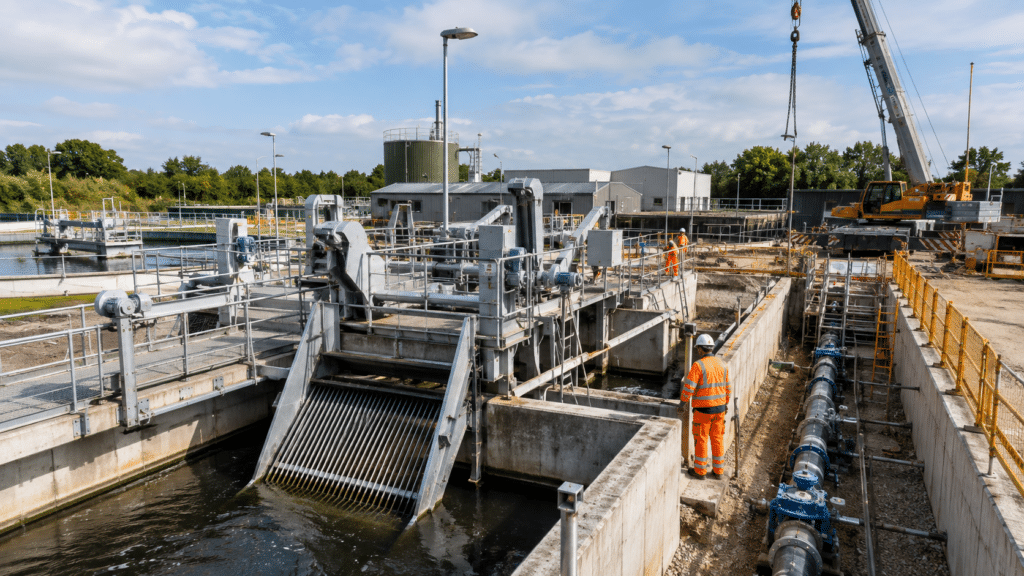
Construction activities on both projects were undertaken within operational water and wastewater treatment environments.
The existing facilities needed to continue performing their treatment functions while infrastructure was modified, replaced and commissioned.
Contractor activities, access, logistics, temporary arrangements, existing services, shutdowns and interfaces with operational assets therefore required careful coordination.
Asteria International provided construction-management and site-delivery coordination across these interfaces.
Construction sequencing needed to reflect the operational dependencies of the treatment processes.
Existing infrastructure could not simply be removed from service when new equipment was physically installed. Modified or replacement systems needed to be appropriately completed, tested and ready to support the process before existing arrangements could be changed.
This required coordination between contractors, specialist suppliers, engineering teams and operational stakeholders throughout implementation.
Health & Safety Leadership
Health and safety formed an integral part of project delivery at both operational sites.
The projects involved contractors and specialist suppliers undertaking civil, mechanical, electrical and controls-related activities around existing treatment infrastructure.
Asteria International’s role included health and safety leadership and coordination, ensuring safety considerations remained connected to construction planning, contractor activities, access, logistics, shutdowns, changeovers and commissioning.
Working within operational treatment facilities also required project activities to recognise existing plant, operational personnel and site-specific hazards.
Health and safety was therefore incorporated into day-to-day project planning and decision-making rather than treated as a separate administrative activity.
This supported controlled construction and commissioning while the facilities continued to perform their operational functions.
Project Controls & Performance Management
Each project contained dependencies across engineering, procurement, contractor mobilisation, construction, operational interfaces and commissioning.
Asteria International maintained oversight of these activities through project planning, programme management and project controls.
Progress within individual packages was considered against the overall requirements and operational constraints of each project.
Engineering information influenced procurement. Procurement affected construction readiness. Construction sequencing affected operational interfaces, while mechanical, electrical and controls completion influenced commissioning.
Project controls provided visibility across these relationships and supported active project management and decision-making.
Where constraints emerged, their potential consequences for schedule, cost, construction and operational readiness could be assessed and appropriate mitigation or recovery actions coordinated.
Risk & Opportunity Management
Risk and opportunity management remained a distinct part of both project appointments.
Modification of existing treatment infrastructure introduced risks across process performance, existing assets, engineering interfaces, procurement, commercial matters, construction, health and safety, shutdowns, temporary arrangements, commissioning and operational continuity.
Risks identified during feasibility could be carried into engineering and construction planning rather than being lost as the projects progressed into delivery.
Emerging risks were considered against their potential consequences for cost, schedule, treatment performance, construction and operation.
The projects also presented opportunities.
Improved treatment performance, enhanced solids management and greater utilisation of recovered biogas offered opportunities to improve operational and energy performance.
Considering risk and opportunity alongside project controls, engineering and commercial information supported informed decision-making throughout each project.
Commissioning & Operational Integration
Commissioning within operational treatment facilities required controlled transition between existing and modified infrastructure.
Individual pieces of equipment could be mechanically complete without the wider treatment process being ready for changeover.
Commissioning therefore needed to consider process dependencies, electrical and controls availability, existing operations, temporary arrangements and the sequence through which new infrastructure could safely be brought into service.
Asteria International coordinated commissioning interfaces between contractors, specialist suppliers, technical teams and operational stakeholders.
Modified systems were progressively tested and integrated before existing arrangements were changed or removed from service.
This maintained the connection between construction completion, process readiness and continuing operational requirements.
Operational Transition, Handover & Close-Out
Transition into normal operation required coordination of the remaining technical, construction and documentation requirements at each site.
Asteria International coordinated outstanding works, commissioning activities, system acceptance, documentation, training and handover requirements as the modified infrastructure moved into operational use.
Residual project matters continued to be managed through close-out, maintaining continuity between construction, commissioning, operational readiness and final completion.
Project Outcomes
Both independently awarded projects progressed from feasibility and cost development through engineering, procurement, construction, commissioning and operational integration.
At one site, improvements to anaerobic digestion and sludge treatment were combined with enhanced recovery and utilisation of biogas for renewable electricity generation.
At the second site, upgrades to inlet treatment, screening, primary settlement and sludge extraction improved key elements of the wastewater-treatment process.
Across the two projects, Asteria International provided Project Management, Engineering Management, Commercial Management, Construction Management and Project Controls & Risk Management, with Health & Safety embedded throughout project delivery.
Asteria International worked alongside the client, specialist designers, contractors, suppliers and operational teams, maintaining continuity from early project development through physical implementation and transition into operation.
The two projects were awarded separately, reflecting separate client investment decisions and project requirements rather than a wider programme of works.
From Feasibility to Operational Improvement
Effective project development depends upon understanding not only what can be technically achieved but what can practically and commercially be delivered within the existing operational environment.
Early feasibility and cost development established the basis for each investment. Engineering developed the selected solutions. Procurement and commercial management translated those requirements into deliverable packages, while construction management, health and safety, project controls and risk management supported controlled implementation.
Commissioning and operational integration completed that process, bringing modified infrastructure into service while maintaining the requirements of the existing treatment facilities.
Asteria International provides continuity across these project stages, connecting technical development, commercial decision-making and practical delivery from early feasibility through to operation.
Complex Projects. Controlled Delivery.
Asteria International provides Project Management, Engineering Management, Commercial Management, Construction Management and Project Controls & Risk Management for complex capital projects across water, wastewater, energy and other demanding operational environments.
From feasibility and project development through procurement, construction, commissioning, handover and close-out, our focus remains on safe, controlled and effective project delivery.