Integrated Project Leadership Across Complex Water Treatment & Process Infrastructure
Sector: Water & Wastewater
Client: Confidential
Location: United Kingdom – Multiple Sites
Project Value: Confidential
Asteria International Services: Project Management | Engineering Management | Commercial Management | Construction Management | Project Controls & Risk Management
Project Overview
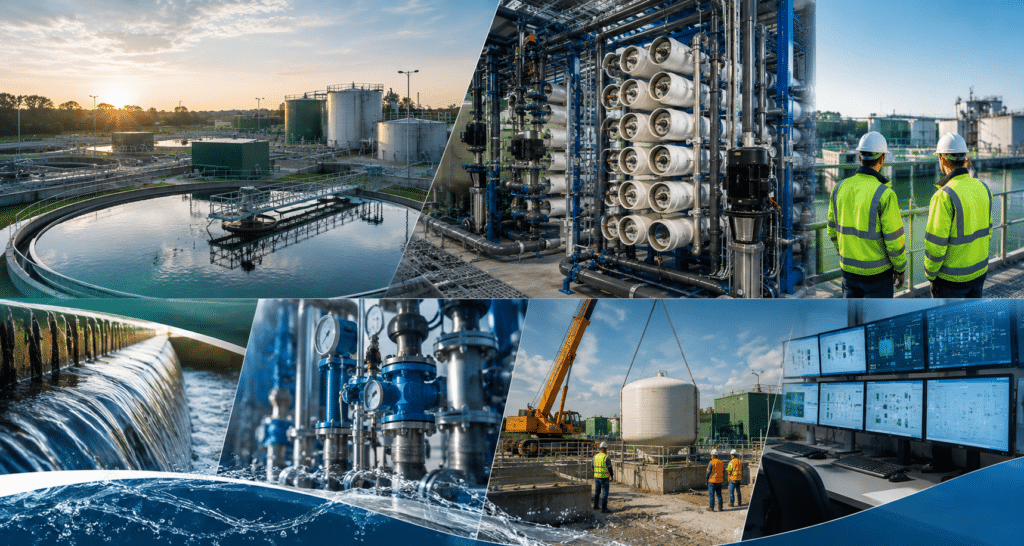
Asteria International provided project-management and delivery support across three wastewater treatment projects undertaken at operational sites in the United Kingdom.
Two of the projects were awarded together, with a further project subsequently awarded separately. Although delivered as individual projects, they involved related treatment challenges and specialist technologies, making them appropriate to present together as an example of Asteria International’s experience within complex wastewater treatment.
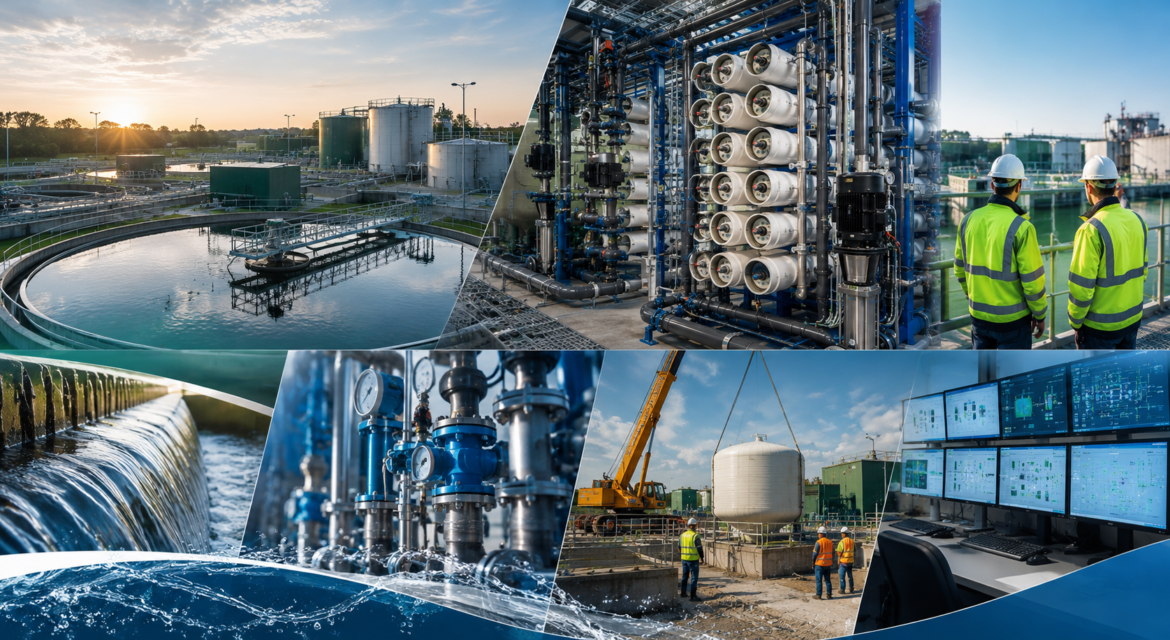
The projects incorporated primary and secondary treatment processes together with specialist membrane technologies, including Reverse Osmosis (RO) and Ultrafiltration (UF), developed to address challenging wastewater characteristics including colour removal and elevated ammonia concentrations.
Each project required coordination across process engineering, civil works, mechanical and electrical systems, instrumentation and controls, procurement, specialist technology suppliers, commercial interfaces, construction and commissioning.
The work was undertaken within existing operational treatment facilities, creating additional requirements around construction sequencing, interfaces with existing infrastructure, shutdowns, changeovers and continuity of treatment operations.
Asteria International’s role was to coordinate these different project requirements while working alongside the client, specialist process designers, technology suppliers, contractors and operational teams.
The Challenge
Wastewater treatment projects are ultimately defined by process performance.
New infrastructure not only needed to be designed, constructed and commissioned successfully; the completed treatment processes needed to achieve the required treatment performance under operational conditions.
The three projects involved challenging wastewater streams requiring treatment for colour removal and elevated ammonia concentrations.
Primary and secondary treatment processes needed to integrate with specialist membrane technologies, while mechanical, electrical, instrumentation and control systems needed to support operation of the complete treatment train.
Delivery within existing operational facilities created further complexity.
New infrastructure needed to be constructed and commissioned around existing treatment processes, requiring careful consideration of access, construction sequencing, temporary arrangements, interfaces, shutdowns and changeovers.
Although the projects were separately delivered, experience across the three sites provided continuity in managing similar technical and project-delivery challenges while allowing the treatment solution at each location to reflect its particular process and operational requirements.
Asteria International’s Appointment
Asteria International provided project leadership and coordination across the development and delivery of the treatment infrastructure.
The role across the three projects included:
- Overall project leadership and delivery coordination
- Client and stakeholder interfaces
- Project planning, programme management and forecasting
- Project reporting and governance
- Engineering management and technical coordination
- Process-engineering interfaces
- Procurement and contractor award management
- Contractor and specialist supplier coordination
- Commercial and contractual management
- Change management
- Project controls and progress management
- Project risk and opportunity management
- Health and safety leadership
- Construction management and coordination
- Civil, mechanical and electrical interfaces
- EC&I and control-system coordination
- Construction sequencing and site logistics
- Existing-plant and operational interfaces
- Shutdown and changeover planning
- Technical deliverables management
- Commissioning planning and coordination
- Process performance and proving
- Operational transition and handover
- Project close-out
The appointments required coordination between the client, process designers, specialist technology suppliers, contractors and operational teams at each site.
Rather than replacing those specialist organisations, Asteria International’s role was to provide the project-management structure and coordination necessary to bring their individual activities together within each project’s overall delivery requirements.
Engineering Management & Technical Integration
The projects required coordination across several engineering disciplines and specialist treatment technologies.
Process engineering established treatment requirements and performance criteria. Civil engineering provided the structures, foundations and infrastructure required for the new systems. Mechanical works included pumps, pipework, valves, tanks and treatment equipment, while electrical and EC&I systems provided power, instrumentation and process control.
Detailed engineering remained with the relevant specialist designers, technology suppliers and contractors.
Asteria International’s engineering-management role focused on coordinating the interfaces between those organisations and maintaining alignment between technical development, procurement, construction and commissioning.
The objective was not simply to complete individual engineering packages, but to ensure the various technical elements could be brought together as a functioning and constructable treatment solution.
Advanced Wastewater Treatment
The projects incorporated multiple stages of wastewater treatment, with different processes performing specific functions within the overall treatment train.
Primary treatment provided initial treatment and conditioning before subsequent stages, while secondary and advanced processes addressed the remaining wastewater characteristics.
Performance of individual stages could not be considered independently.
Changes in upstream wastewater conditions could influence downstream treatment performance, membrane operation, chemical requirements, controls and overall plant capability.
The project-management role therefore required visibility across the interfaces between individual treatment packages rather than treating each item of equipment as an isolated installation.
Specialist Membrane Treatment
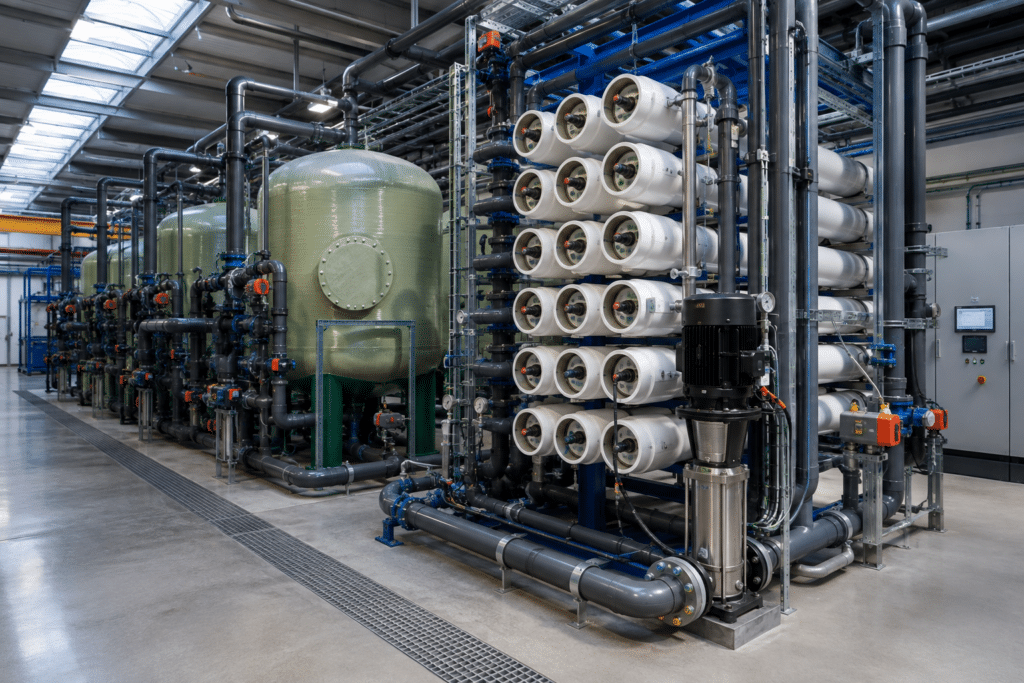
Reverse Osmosis and Ultrafiltration technologies formed an important part of the treatment solutions.
These systems introduced specialist process, mechanical, electrical and control requirements beyond those associated with conventional wastewater infrastructure.
Successful membrane operation depended upon appropriate upstream treatment, feed characteristics, pressure, flow, filtration performance, instrumentation and controls.
Operational considerations including cleaning, maintenance and waste streams also needed to be incorporated into the overall treatment solution.
Asteria International coordinated specialist technology suppliers alongside the wider engineering and construction activities, ensuring that equipment requirements remained aligned with surrounding civil, mechanical, electrical and control infrastructure.
This helped integrate specialist packaged equipment into the complete treatment process rather than allowing it to develop independently.
Technology-Agnostic Project Delivery
Asteria International’s approach to the projects was technology agnostic.
The objective was not to promote a particular proprietary treatment process, equipment manufacturer or technology supplier. The focus remained on identifying and delivering solutions capable of meeting the process, operational and performance requirements of each project.
This was particularly important within specialist wastewater treatment, where different technologies can provide alternative approaches depending upon influent characteristics, required treatment performance, existing infrastructure, operating philosophy, capital requirements and whole-life considerations.
The projects incorporated specialist technologies from different suppliers alongside conventional process, mechanical, electrical and control infrastructure.
The project-management approach therefore remained focused on process performance, technical suitability, constructability, commercial considerations and operational requirements, rather than preference for a particular proprietary solution.
Asteria International coordinated the interfaces between the selected technologies, specialist suppliers, designers and contractors, helping ensure that the chosen solutions could be effectively integrated into the wider treatment processes and existing site infrastructure.
This independent approach also allowed technical and commercial considerations to be assessed together as each project developed.
Managing Challenging Wastewater Conditions
A significant technical challenge across the projects was the treatment of difficult wastewater characteristics, including colour and elevated ammonia concentrations.
Achieving the required treatment performance depended upon the interaction between incoming wastewater conditions, individual treatment stages, operating parameters, specialist technology and process controls.
The focus therefore needed to remain on performance of the complete treatment train rather than simply installation of individual items of equipment.
Asteria International coordinated the project and technical interfaces associated with these requirements, maintaining visibility of treatment-performance objectives through engineering, procurement, construction and commissioning.
Successful completion ultimately depended upon demonstrating that the integrated treatment systems could achieve their required operational performance.
Procurement & Specialist Supplier Management
The projects relied upon specialist treatment technologies and equipment suppliers whose packages incorporated proprietary equipment, defined operating requirements and specific interfaces with surrounding infrastructure.
Procurement therefore needed to remain closely connected to engineering development.
Vendor information influenced the developing design, while equipment requirements affected civil works, mechanical connections, electrical supplies, instrumentation, controls and construction sequencing.
Through its project-management role, Asteria International coordinated these supplier interfaces alongside the wider project requirements.
This required more than monitoring equipment delivery. Supplier information, technical requirements and installation needs had to be incorporated into each project’s engineering and construction activities at the appropriate stage.
The technology-agnostic approach also meant that procurement and supplier engagement remained focused on the requirements of the project rather than predetermined preference for a particular manufacturer.
Commercial & Contractual Management
Commercial management formed part of the wider project-delivery role.
The projects involved specialist technology suppliers, equipment packages and construction contractors, creating commercial interfaces alongside the technical dependencies.
Asteria International maintained visibility of procurement, contractor appointments, package requirements, project change and developing scope.
Technical decisions were considered alongside their potential implications for cost, schedule and contractual responsibilities.
Where process information, existing-site conditions or developing project requirements affected package scope, those interfaces needed to be identified and managed during delivery.
This maintained a practical connection between commercial management and the engineering and construction requirements of each project.
Construction Within Operational Facilities
Construction formed a significant part of the project-management challenge.
New treatment infrastructure was being introduced into existing operational facilities, creating constraints around access, sequencing, logistics, temporary arrangements and interfaces with existing systems.
Civil works, mechanical installation, electrical infrastructure, instrumentation and specialist treatment packages needed to be coordinated within the construction schedule at each site.
Asteria International coordinated contractors, specialist suppliers and operational stakeholders across these interfaces.
New equipment and systems needed to be installed around existing operational assets, with connections, shutdowns and changeovers planned to minimise disruption to treatment operations.
Construction activities therefore needed to recognise the requirements of the operating facility rather than treating the sites as unrestricted construction environments.
Construction Management Within Operational Facilities
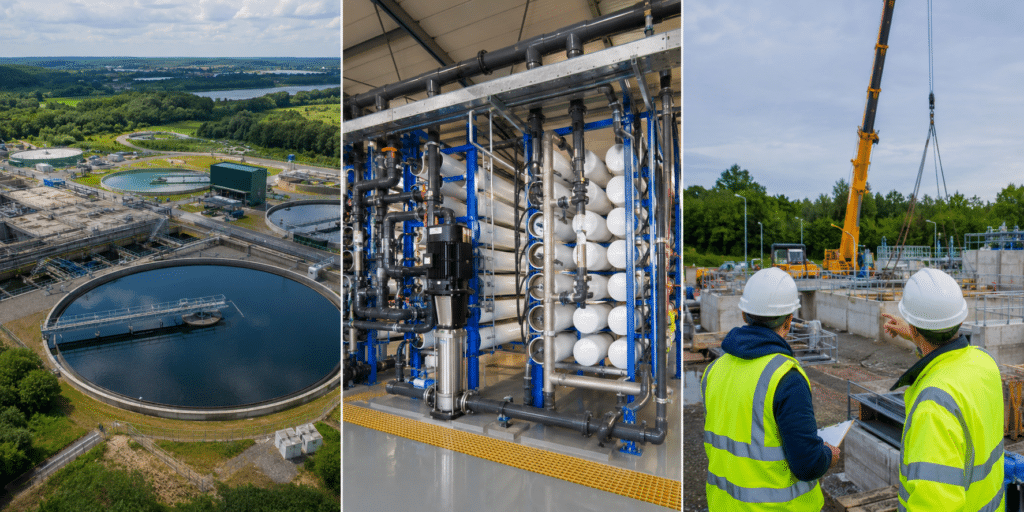
Construction formed a significant element of the projects.
New treatment infrastructure was introduced within existing operational facilities, creating constraints around access, sequencing, logistics, temporary arrangements and interfaces with existing systems.
Civil works, mechanical installation, electrical infrastructure, EC&I and specialist treatment packages needed to be coordinated within the construction schedule at each site.
Asteria International provided construction-management coordination across these interfaces, working with contractors, specialist suppliers and operational stakeholders.
New equipment needed to be installed around existing assets, with connections, shutdowns and changeovers coordinated to minimise unnecessary disruption to treatment operations.
Construction activities therefore needed to recognise the requirements of the operating facilities rather than treating the sites as unrestricted construction environments.
Health & Safety Leadership
Health and safety formed an integral part of project delivery across the three sites.
The projects involved civil, mechanical, electrical and EC&I construction activities together with specialist contractors and technology suppliers working within existing operational treatment facilities.
Asteria International’s role included health and safety leadership, ensuring safety considerations remained integrated with project planning, contractor coordination, construction sequencing, site logistics and operational interfaces.
Particular attention was required where construction activities interacted with existing plant and services and during connections, shutdowns, changeovers and commissioning.
Health and safety was therefore considered alongside project schedule, construction requirements and operational constraints throughout delivery.
The objective was to maintain safe and controlled project delivery while allowing the existing facilities to continue performing their operational functions.
Mechanical, Electrical & EC&I Integration
Successful treatment performance depended upon the integration of process equipment with the supporting mechanical, electrical and EC&I infrastructure.
Pumps, pipework, valves, membrane systems and process equipment required appropriate electrical supplies, instrumentation and coordinated controls.
Instrumentation needed to provide visibility of treatment conditions and equipment performance, while control systems needed to respond appropriately to changing process conditions.
Asteria International coordinated the interfaces between the specialist disciplines and suppliers responsible for engineering, installation and commissioning.
This systems-based approach helped identify potential gaps between individual packages before they developed into construction, commissioning or operational issues.
Project Controls & Performance Management
Each project contained dependencies across engineering, procurement, specialist suppliers, construction and commissioning.
Engineering information influenced procurement. Supplier information influenced detailed design. Civil works affected equipment installation. Mechanical and electrical completion influenced commissioning, while process proving depended upon complete treatment systems being available.
Asteria International maintained visibility of these relationships through project controls and performance management.
Technical deliverables, procurement activities, contractor progress, construction dependencies, commissioning readiness and emerging constraints were considered against the overall position of each individual project.
Project controls were therefore used to support active management and decision-making rather than simply provide retrospective reporting.
Where constraints emerged, their potential consequences for subsequent activities could be assessed and appropriate actions coordinated with the relevant project participants.
Risk & Opportunity Management
Risk and opportunity management remained a distinct and integral part of the project-management approach.
The projects contained risk across process performance, specialist technology, engineering interfaces, procurement, commercial matters, existing-site conditions, construction, health and safety, operational continuity and commissioning.
Asteria International maintained visibility of these risks and considered their potential consequences for cost, schedule, technical performance, construction and operation.
Risk management was integrated with project controls and day-to-day project decision-making rather than treated solely as a reporting exercise.
The technology-agnostic approach also supported consideration of opportunity.
Alternative technical approaches, supplier solutions, construction methodologies, sequencing and process improvements could be considered against the requirements of each project rather than being constrained by commitment to a particular proprietary solution.
This allowed both risks and opportunities to be considered as the projects developed and delivery information matured.
Commissioning, Process Proving & Performance
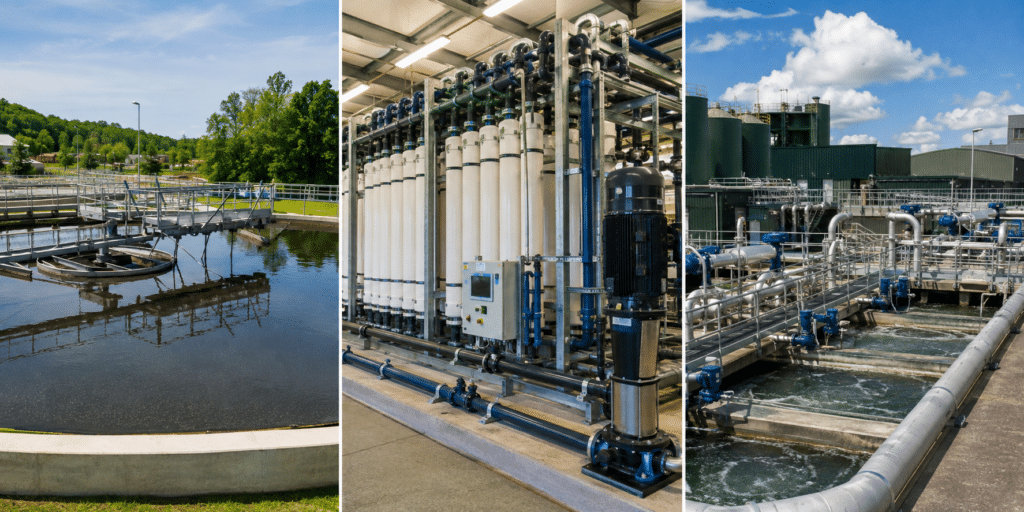
Commissioning was a critical stage across all three projects, with successful completion dependent upon the performance of the complete treatment systems rather than individual items of equipment.
Primary and secondary treatment processes, specialist membrane systems, mechanical equipment, electrical infrastructure, instrumentation and controls needed to operate together under actual process conditions.
Asteria International coordinated commissioning activities across specialist suppliers, contractors and operational teams, maintaining visibility of technical dependencies, outstanding works and operational requirements.
Process proving provided the final confirmation that the treatment systems could achieve the required performance, particularly in relation to the challenging wastewater characteristics being addressed.
Commissioning and performance proving were therefore managed as part of project delivery through to completion rather than as isolated activities at the end of construction.
Operational Transition, Handover & Close-Out
Transition into operation required the new treatment infrastructure to move from construction and commissioning into the control of the operational teams at each site.
Asteria International coordinated outstanding works, documentation, process proving, system acceptance, training and handover requirements through this transition.
Residual technical and construction matters continued to be managed through close-out, maintaining continuity between commissioning, operational readiness and final project completion.
Project Outcomes
The three projects progressed from engineering development and procurement through construction, commissioning, process proving and operational handover.
The completed infrastructure brought together primary and secondary treatment processes, specialist membrane technologies and associated civil, mechanical, electrical and EC&I systems to address challenging wastewater characteristics including colour and elevated ammonia concentrations.
A technology-agnostic approach allowed the requirements of each site to drive the treatment solution, with specialist technologies evaluated and integrated according to process performance, technical suitability, constructability, commercial considerations, operational requirements and project risk.
Across the three projects, Asteria International provided Project Management, Engineering Management, Commercial Management, Construction Management and Project Controls & Risk Management, with Health & Safety embedded throughout delivery.
Working alongside the client, process designers, specialist technology suppliers, contractors and operational teams, Asteria International maintained coordination across the interfaces necessary to take each project from development through construction and into operation.
Two projects were awarded together, followed by a further separately awarded project, continuing Asteria International’s involvement in the delivery of complex wastewater treatment infrastructure.
Integrated Water & Wastewater Project Delivery
Successful wastewater treatment projects depend upon the integration of process technology with the infrastructure, people and systems required to operate it.
Technical development must remain connected to procurement and commercial decisions. Specialist equipment must integrate with civil, mechanical, electrical and control systems. Construction must be managed safely within operational facilities, while project controls and risk management must maintain visibility of the dependencies that can affect delivery.
Commissioning and process proving then bring those elements together, confirming that the completed infrastructure performs as required under operational conditions.
Asteria International brings these project-delivery disciplines together, providing experienced leadership across the technical, commercial, construction, safety and project-control interfaces that shape successful delivery.
Complex Projects. Controlled Delivery.
Asteria International provides Project Management, Engineering Management, Commercial Management, Construction Management and Project Controls & Risk Management for complex capital projects across water, wastewater and other demanding operational environments.
From project development and procurement through construction, commissioning, handover and close-out, we provide experienced leadership focused on safe, controlled and effective project delivery.