Client-Side Project Management, JCT Contract & Change Management & Integrated Project Controls
Engagement Model: Client-Side Professional Services – Project Management and Technical Advisory
Capital Project: £14.2 Million Multi-Site Civic Estate Modernisation Project
Form of Contract: JCT Design and Build (D&B) Contract
Project Scope: Civic Building Retrofit | Structural Alterations | M&E Infrastructure | Community Facilities
Delivery Environment: Three Operational Public Buildings | Tier-1 Principal Contractor
Asteria International Services: Client-Side Project Management | Commercial Management | Construction Management | Engineering Management | Project Controls & Risk Management
Project Overview
Asteria International provided client-side project leadership and day-to-day project management for a £14.2 million multi-site civic estate modernisation project.
The project formed part of a wider strategy to modernise and consolidate ageing public-sector property assets and incorporated major structural alterations, mechanical and electrical infrastructure replacement, building management system upgrades and modern internal fit-out.
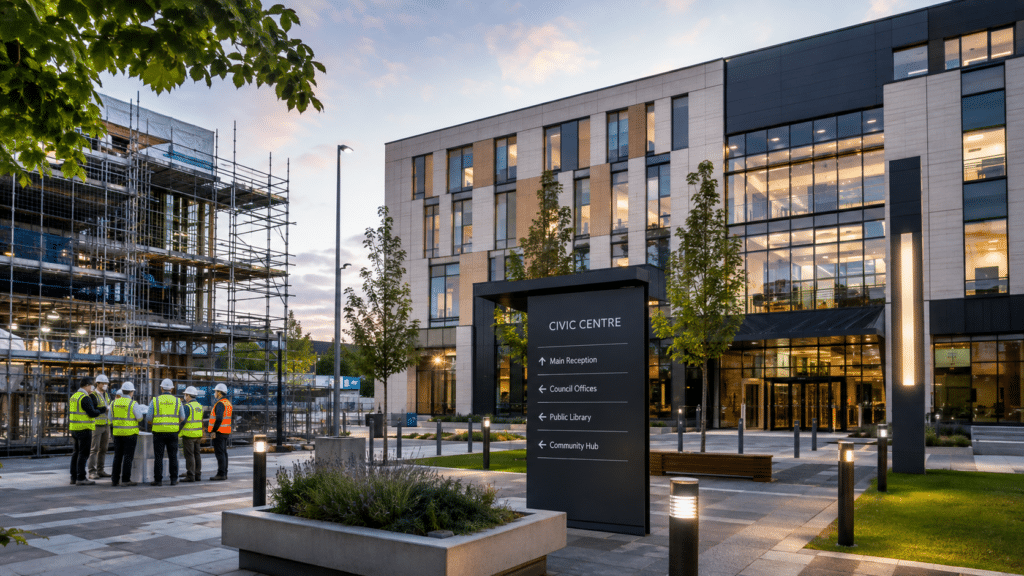
Works were undertaken across a primary civic building and two community facilities, creating a complex multi-site delivery environment in which significant construction activities needed to be coordinated around continuing public services.
Asteria International integrated with the client delivery team, providing project management supported by JCT Design and Build contract and change management, commercial management, engineering coordination, construction oversight and independent project controls.
The role required the technical, operational, programme and commercial aspects of delivery to be considered together while maintaining continuity of essential public-facing services.
The Challenge
Modernising existing public buildings presents different challenges from delivering new-build assets.
Existing structures and legacy building services can introduce uncertainty that only becomes fully understood as construction progresses. At the same time, new structural, mechanical, electrical and building management systems need to be integrated within assets that were not originally designed around modern requirements.
For this project, those challenges were increased by the requirement to maintain public services throughout construction.
The buildings supported important community and civic functions. Construction sequencing, temporary arrangements, isolations, access, dust and noise therefore needed to be carefully managed around continuing operations.
The project also involved simultaneous delivery across three locations, requiring the client to maintain visibility of multiple construction work fronts while managing a single overall capital investment.
Contractual change represented a further area of potential exposure.
As existing buildings were opened up, previously concealed conditions, structural interfaces and developing engineering requirements had the potential to generate variations with associated programme and commercial consequences.
The client therefore required a project management function capable of coordinating construction and engineering delivery while maintaining independent control of programme, risk, contractual change and commercial exposure.
Asteria International’s Role
Asteria International worked as part of the client-side delivery team, providing project leadership and independent oversight of the Tier-1 principal contractor within a JCT Design and Build contractual environment.
The scope included:
- Client-side project management and project leadership
- Principal contractor coordination
- JCT Design and Build contract and change management
- Commercial and variation management
- Project risk management
- Contractor variation assessment
- Independent master programme development
- Principal contractor programme review and challenge
- Structural, architectural and M&E coordination
- Building services and BMS interface management
- Construction progress monitoring
- Multi-site and operational interface management
- Stakeholder and public-service coordination
- Progress, programme and commercial reporting
Asteria International coordinated these functions through a single client-side project management structure, providing the client with a consolidated understanding of delivery across all three locations.
Project Management & Multi-Site Delivery
Asteria International provided day-to-day client-side management of the project, coordinating the principal contractor, engineering activities, programme, commercial change and operational interfaces across the three buildings.
Each location presented different delivery requirements and constraints.
Structural alterations needed to be coordinated with existing building conditions. Mechanical and electrical infrastructure replacement required carefully planned isolations and changeovers. Internal refurbishment and fit-out needed to progress around areas remaining in operational use.
Asteria International coordinated these activities within a single project delivery structure, maintaining visibility of progress, actions, risks, decisions and interfaces across the three sites.
Project meetings, contractor coordination, programme reviews, engineering decisions, risk management, change control and progress reporting were managed as interconnected elements of project delivery.
This enabled emerging issues at individual buildings to be understood in the context of their potential effect on the wider project.
It also provided the client with a single, informed project position rather than separate and potentially disconnected views of construction, engineering, programme and commercial performance.
Maintaining Operational Public Services
Maintaining continuity of public services was a fundamental project requirement.
Significant construction activities needed to be undertaken within and around buildings that remained partially operational.
Asteria International coordinated construction phasing with the client’s operational requirements, ensuring that access, temporary arrangements, service isolations and the sequencing of individual work areas were considered before activities commenced.
Particular attention was given to mechanical and electrical changeovers where disruption to power, ventilation or other building services could directly affect occupied areas.
Construction activities were therefore considered not only in terms of the most efficient sequence for the contractor but also against the operational requirements of the client.
This approach enabled major refurbishment works to progress while maintaining continuity of the public services operating from the affected facilities.
Independent Programme Control
Asteria International developed and maintained an independent logic-linked master programme using Microsoft Project.
The programme incorporated all three locations within a single project-control structure, providing visibility of structural works, M&E activities, fit-out, construction dependencies, operational interfaces and key completion milestones.
This gave the client its own evidence-based assessment of project progress rather than relying solely upon programme information generated by the principal contractor.
Detailed work breakdown structures enabled the sequencing of structural alterations, mechanical and electrical first-fix activities, building-services installations and final finishes to be monitored against the wider project requirements.
Contractor programme submissions were reviewed against the independent master programme to assess progress, developing constraints and potential movement in critical activities.
Where emerging programme risks were identified, their causes and potential consequences could be assessed and appropriate mitigation discussed with the project team.
The programme also supported coordination of construction phases with the client’s operational requirements, ensuring that planned relocations, isolations and access arrangements remained aligned with the developing works.
Project Risk & Change Management
Project risk management was integrated with the wider delivery and change-control process.
Asteria International maintained oversight of emerging issues and coordinated discussions with the client, principal contractor and relevant technical stakeholders to understand their potential consequences.
Risks associated with existing building conditions, structural interfaces, specialist equipment, material availability, building-services installations and construction sequencing were considered against their potential effect on operations, programme and cost.
Where practicable, mitigation measures were developed before the issue materially affected construction.
This was particularly important within existing buildings, where emerging technical issues could quickly create consequences for several interconnected work packages.
Where an issue subsequently resulted in contractual change, the technical and programme information developed through the project-management process provided an evidence base from which the resulting variation could be assessed.
Variation & Commercial Management
Contractual change represented a significant element of the project-management requirement, particularly given the uncertainties associated with refurbishment of existing buildings.
During delivery, the principal contractor submitted 38 variations/change submissions, with submitted values totalling approximately £510,000.
Asteria International coordinated the technical, programme and commercial review of these submissions against the relevant scope, contractual requirements, project records, available building information and actual construction progress.
The purpose of the assessment was not simply to reduce contractor quotations.
Each proposed change required consideration of what had changed, why additional work was required, whether the scope represented a legitimate variation under the JCT Design and Build contract and what constituted an appropriate programme and commercial consequence.
Historical information, project records, existing building surveys and technical information were considered where relevant to establish an evidence-based client position.
Following assessment and agreement through the project change-control process, approximately £185,000 of variation value was agreed.
The difference between submitted and agreed values represented approximately £325,000 of cost avoidance against the principal contractor’s original submissions.
This provided a measurable demonstration of the value of integrating technical understanding, project records, contractual change management and commercial assessment within the wider client-side project management function.
Engineering & Technical Coordination
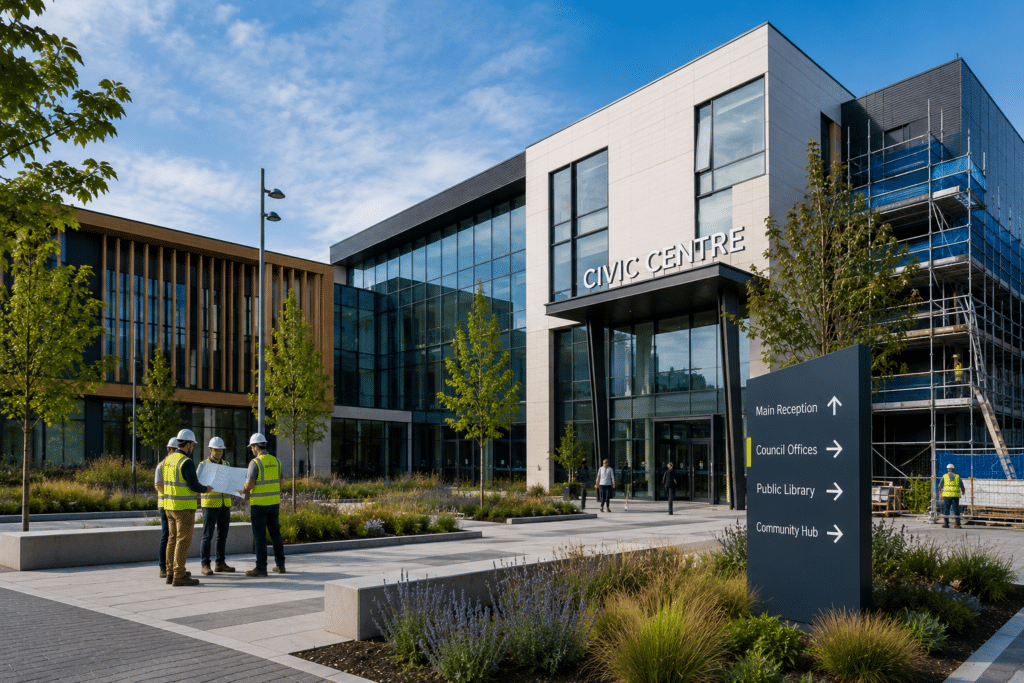
The project incorporated extensive structural, architectural, mechanical and electrical interfaces within existing buildings.
Asteria International coordinated these technical requirements as part of the overall project management function.
Structural alterations needed to be integrated with the existing building fabric while new mechanical and electrical systems required coordination with retained infrastructure, new layouts and operational requirements.
Building management system interfaces also needed to be considered alongside the installation and commissioning of replacement building services.
Potential design and construction interfaces were reviewed through the project team to identify issues before they unnecessarily disrupted subsequent activities.
This engineering capability was also important when assessing contractual change.
Asteria International could consider the underlying technical requirement before assessing the associated programme and commercial consequences, providing the client with a more complete understanding of individual variations.
Construction & Interface Management
Construction activities were undertaken across three operational public buildings, requiring close coordination of contractors, work areas and client activities.
Asteria International monitored construction progress and maintained visibility of emerging constraints that could affect subsequent activities or occupied areas.
Work sequencing, access arrangements, temporary provisions and planned service interruptions were considered within the wider project programme.
Regular coordination with the principal contractor enabled upcoming activities and potential interfaces to be reviewed before work progressed into operational areas.
This was particularly important where structural works, M&E installations or service changeovers had the potential to affect continuing public operations.
The approach enabled construction decisions to be considered alongside engineering, programme and operational requirements rather than in isolation.
Connecting Project, Operational & Commercial Control
A key feature of Asteria International’s approach was the integration of project disciplines that could otherwise become fragmented.
An issue discovered within an existing building was not considered solely as a construction problem.
The project team considered:
What has been discovered or changed?
What is technically required?
Can the impact be mitigated before additional work is required?
Does it affect an occupied or operational area?
What does it mean for the project programme?
Does it constitute a contractual variation?
What represents the appropriate commercial consequence?
This provided the client with an integrated understanding of developing project issues and reduced the risk of engineering, operational, programme and commercial decisions progressing independently of one another.
Protecting Programme & Operational Continuity
Programme management needed to consider both construction completion and continuity of the client’s public services.
Asteria International maintained close oversight of progress across the three locations and coordinated construction sequencing with the client’s operational requirements.
Independent programme analysis provided visibility of developing constraints while allowing mitigation measures to be considered before critical activities were affected.
The project ultimately achieved Practical Completion approximately three weeks ahead of the required baseline completion position.
Importantly, the phased delivery strategy also enabled the client to maintain public-facing operations throughout construction, with no unplanned facility closures recorded as a consequence of the works.
This demonstrated that programme performance was being considered alongside operational continuity rather than construction completion being pursued in isolation.
Protecting Client Value
The combination of client-side project management, engineering understanding, JCT Design and Build change management and independent project controls provided the client with an informed position from which project change and expenditure could be assessed.
Across 38 contractor variations/change submissions with an original submitted value of approximately £510,000, approximately £185,000 was ultimately agreed following assessment through the project change-control process.
This represented approximately £325,000 of cost avoidance against the values originally submitted.
The commercial outcome was supported by understanding the underlying technical requirements, maintaining appropriate project records, assessing programme implications and applying the contractual requirements consistently.
This strengthened the client’s control of project expenditure while maintaining an evidence-based and professionally administered relationship with the principal contractor.
The commercial outcome was therefore one consequence of the wider project-management approach rather than an isolated commercial exercise.
Project Outcomes
Asteria International provided an integrated client-side project management function across a complex, multi-site civic estate modernisation project.
Key outcomes included:
- £14.2 million capital project managed across three operational public buildings
- Day-to-day client-side project leadership and principal contractor coordination
- Delivery within a JCT Design and Build contractual environment
- Structural alterations, M&E infrastructure, BMS integration and building fit-out coordinated within a single project-delivery structure
- Construction phasing coordinated around continuing public services
- Independent logic-linked master programme developed and maintained using Microsoft Project
- Project risks and emerging change actively managed throughout delivery
- 38 contractor variations/change submissions assessed through the project change-control process
- Approximately £510,000 of submitted variation value reviewed
- Approximately £185,000 of variation value agreed
- Approximately £325,000 difference between submitted and agreed variation values
- Independent technical, programme and commercial assessment supporting client decision-making
- Multi-site construction, operational and engineering interfaces coordinated throughout delivery
- Practical Completion achieved approximately three weeks ahead of the required baseline position
- No unplanned facility closures arising from the construction works
The outcomes demonstrate the importance of integrating project management, engineering, construction, programme and commercial control when delivering major refurbishment works within operational public buildings.
Asteria International provided the client with an independent project position from which the performance of a substantially larger capital investment could be actively understood and controlled.
Conclusion
Modernising operational public buildings creates complex relationships between existing assets, new engineering systems, construction activities, operational continuity, programme and contractual change.
Asteria International integrated these requirements within a single client-side project management function.
Day-to-day project leadership provided coordination across three operational buildings. Independent programme control provided visibility of delivery performance. Engineering understanding supported technical decision-making and the integration of structural and building-services works. Structured risk and change management supported the control of emerging issues, while commercial management ensured contractor variations were assessed against the underlying project evidence.
The project demonstrates how focused specialist consultancy support can provide effective client-side leadership and control within a complex Tier-1 delivery environment.
For the client, Asteria International provided more than additional project resource. The appointment provided experienced client-side project leadership across three operational public buildings, supported by the engineering understanding, construction management, programme control, JCT Design and Build change management and commercial capability required to maintain control of a £14.2 million capital investment.ain control of a £14.2 million capital investment.