Integrated Project Leadership Through Construction, Commissioning & Operational Transition
Sector: Healthcare / Net Zero & Decarbonisation
Client: Confidential
Location: United Kingdom
Contract Value: Confidential
Asteria International Services: Project Management | Commercial Management | Construction Management | Engineering Management | Project Controls & Risk Management
Project Overview
Asteria International was engaged under a professional services agreement to provide the Project Manager for a complex healthcare decarbonisation and energy infrastructure project within a live operational environment.
The appointment provided senior project leadership through construction, commissioning and operational transition, coordinating the client interface, contractors, specialist suppliers and technical teams across the project.
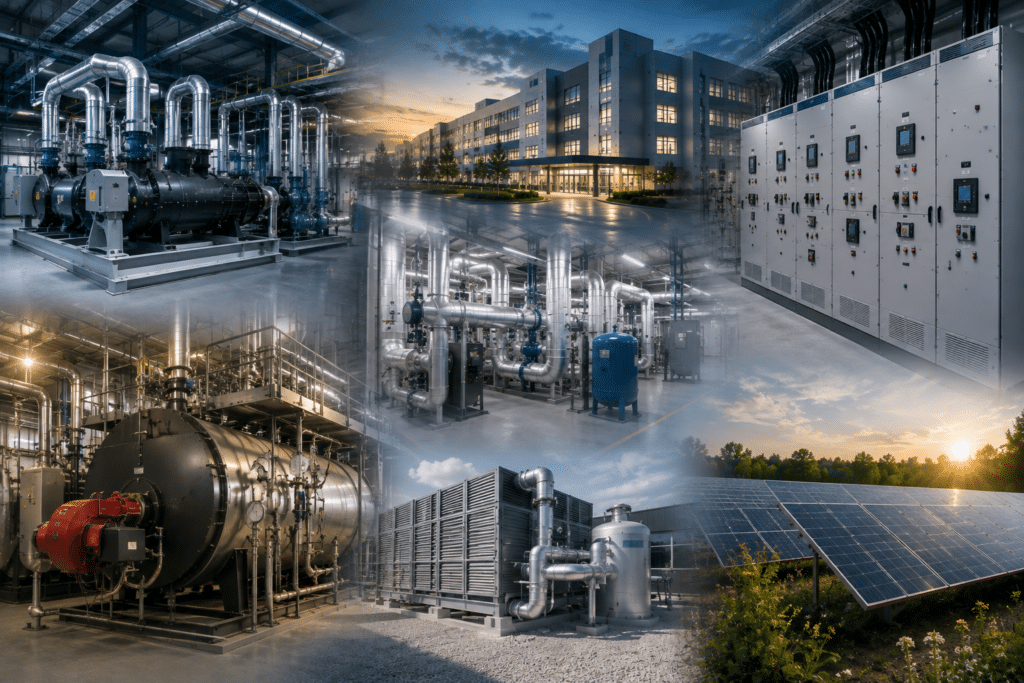
The scope involved substantial modification of the site’s existing energy infrastructure, including the transition from legacy steam-based heating and domestic hot-water services to new lower-carbon systems.
The project incorporated an open-loop ground source heat pump system with abstraction and recharge infrastructure, new LTHW boiler plant and distribution, thermal storage, CHP heat recovery, Solar PV, electrical infrastructure, controls and system integration, together with associated G99 and DNO interfaces.
Although delivered as a single project, these systems created significant technical, construction and commissioning dependencies. Existing infrastructure also needed to remain operational while new systems were installed, commissioned and progressively brought into service.
Asteria International’s role was to provide the project leadership necessary to coordinate these interfaces and maintain alignment between programme, commercial, construction, technical, safety, commissioning and operational requirements.
The Challenge
Delivering significant energy infrastructure change within an operational healthcare facility presented a demanding project environment.
Existing heating, domestic hot-water and supporting infrastructure needed to remain operational while replacement and new systems were constructed, commissioned, proven and progressively introduced.
For key stages of the project, legacy steam infrastructure and new LTHW systems therefore needed to operate alongside one another.
This created dependencies between construction sequencing, shutdowns, temporary arrangements, system changeovers, controls, existing services and commissioning.
Domestic hot-water changeovers also required careful coordination around water hygiene and the management of Legionella risk during commissioning and transition.
At the same time, multiple contractors, specialist suppliers and technical disciplines were delivering different elements of the same project. A delay, technical issue or change within one package could affect other contractors, the project schedule, commercial position, commissioning sequence or continuity of operational services.
The Project Manager therefore needed to maintain visibility across the complete project rather than managing each package in isolation.
Asteria International’s Appointment
Through the Project Manager appointment, Asteria International provided day-to-day project leadership and coordination across the principal delivery interfaces.
The role included:
- Overall project leadership and delivery management
- Client interface and stakeholder management
- Project planning, programme management and forecasting
- Progress monitoring and recovery planning
- Monthly client reporting and project governance
- Commercial and contractual management
- Procurement and contractor award management
- Contractor and specialist supplier coordination
- Early Warning Notice and change management
- Project risk and opportunity management
- Health and safety leadership
- Construction management and site-delivery coordination
- Construction sequencing and logistics
- Contractor access management
- Shutdown and changeover planning
- Project deliverables management
- Engineering management and technical-interface coordination
- Project controls
- Commissioning planning and coordination
- Practical Completion, handover and project close-out
The breadth of the role reflected the interconnected nature of the project. Commercial, technical, construction, schedule and commissioning decisions could not be managed effectively as separate activities.
Asteria International provided continuity across these interfaces while working alongside the client’s representatives, specialist designers, contractors, equipment suppliers and operational teams.
Planning, Programme & Project Controls
As a standalone project containing numerous interdependent packages, effective planning and project controls were central to delivery.
The project schedule brought together procurement, contractor mobilisation, engineering deliverables, construction readiness, access, installation, shutdowns, changeovers, controls, commissioning and completion.
Progress within individual packages therefore needed to be considered against the requirements of the overall project.
Asteria International maintained oversight of these dependencies through the Project Manager role, assessing emerging constraints against their potential effect on schedule, construction, commercial position, commissioning and operational requirements.
Where delays or constraints developed, mitigation and recovery activities could therefore be considered across the project rather than solely within the affected package.
This allowed planning and project controls to support active project management and decision-making throughout delivery.
Commercial, Contractual & Procurement Management
Commercial management formed an important part of the Project Manager appointment.
Procurement decisions, contractor performance, project change, schedule impacts and construction requirements were interconnected and needed to be considered together.
The role included procurement and contractor award activities together with management of commercial and contractual interfaces during project delivery.
Emerging changes were considered alongside their potential implications for cost, schedule, construction and completion. Early Warning Notices were used where developing issues required formal recognition and action.
This approach kept commercial considerations connected to the realities of project delivery rather than treating them as an isolated workstream.
Construction Management & Operational Continuity
Construction was undertaken within a live healthcare environment.
Contractor access, deliveries, construction areas, temporary arrangements, modifications to existing infrastructure, electrical works, shutdowns and commissioning activities therefore needed to be coordinated around continuing operational requirements.
Through the Project Manager appointment, Asteria International provided construction-management and site-delivery coordination across these interfaces.
Particular attention was required where new infrastructure connected to or replaced existing operational services.
Shutdowns and system changeovers were coordinated between contractors, technical specialists, commissioning teams and healthcare stakeholders before implementation.
Construction sequencing therefore considered not simply when equipment could be installed, but when existing services could safely be isolated, new infrastructure commissioned and systems returned to operational service.
The objective throughout was to progress the project while maintaining continuity of critical heating, domestic hot-water and associated services.
Transition from Steam to LTHW
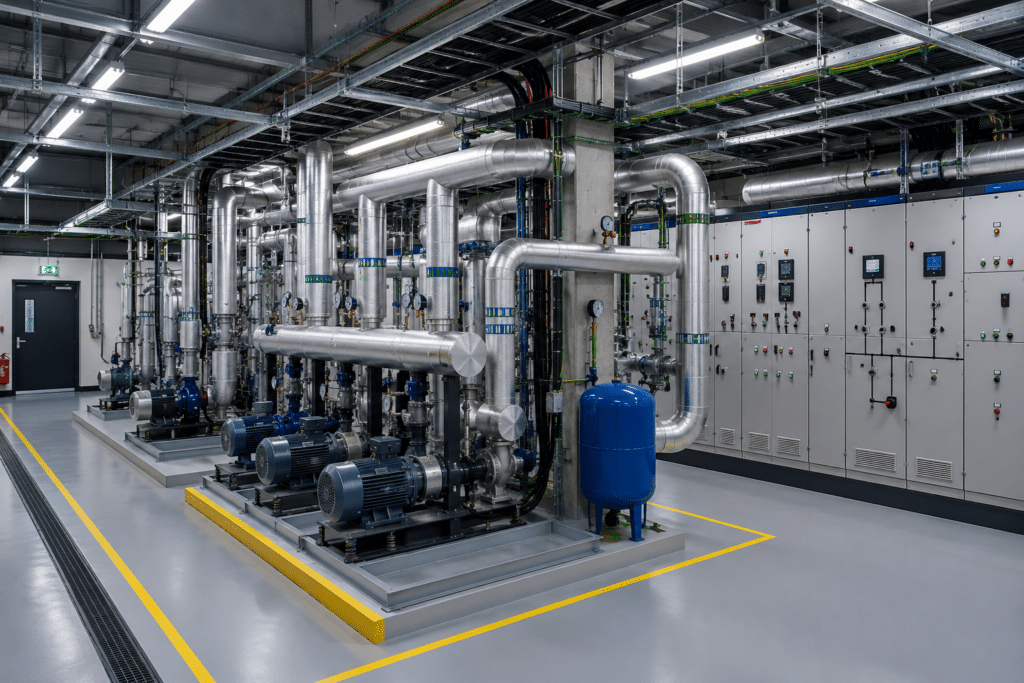
A central element of the project was the transition away from legacy steam infrastructure for heating and domestic hot-water services.
This could not be achieved through a single shutdown and changeover.
Existing and new systems needed to operate in parallel during key stages, allowing replacement infrastructure to be constructed, commissioned, tested and proven before existing services could progressively be removed from operation.
Through the Project Manager appointment, Asteria International coordinated the construction and commissioning interfaces associated with this transition, including shutdown planning, contractor activities, stakeholder requirements and the sequence through which new systems were introduced.
Domestic hot-water transition required additional consideration of water hygiene, system temperatures, commissioning and operational readiness to manage Legionella and associated water-hygiene risks.
The transition therefore represented not simply an engineering modification but a significant project, construction and operational interface.
Engineering Management & Technical Interfaces
The project required coordination across mechanical, electrical, controls, renewable-energy and specialist technical disciplines.
Detailed engineering and technical authority remained with the appropriate specialist designers, contractors and technical teams.
Asteria International’s engineering-management role focused on coordinating the interfaces between these organisations and ensuring that technical deliverables and decisions remained aligned with procurement, schedule, construction and commissioning requirements.
Technical development needed to be considered within the context of how the project would actually be constructed and brought into operation.
This was particularly important where one specialist package depended upon infrastructure or information being provided by another.
The role therefore connected specialist engineering activities with the wider requirements of project delivery without replacing the detailed design or technical responsibilities of the appointed specialists.
Integrating Low-Carbon Energy Infrastructure
The project brought together several different energy technologies within an existing operational estate.
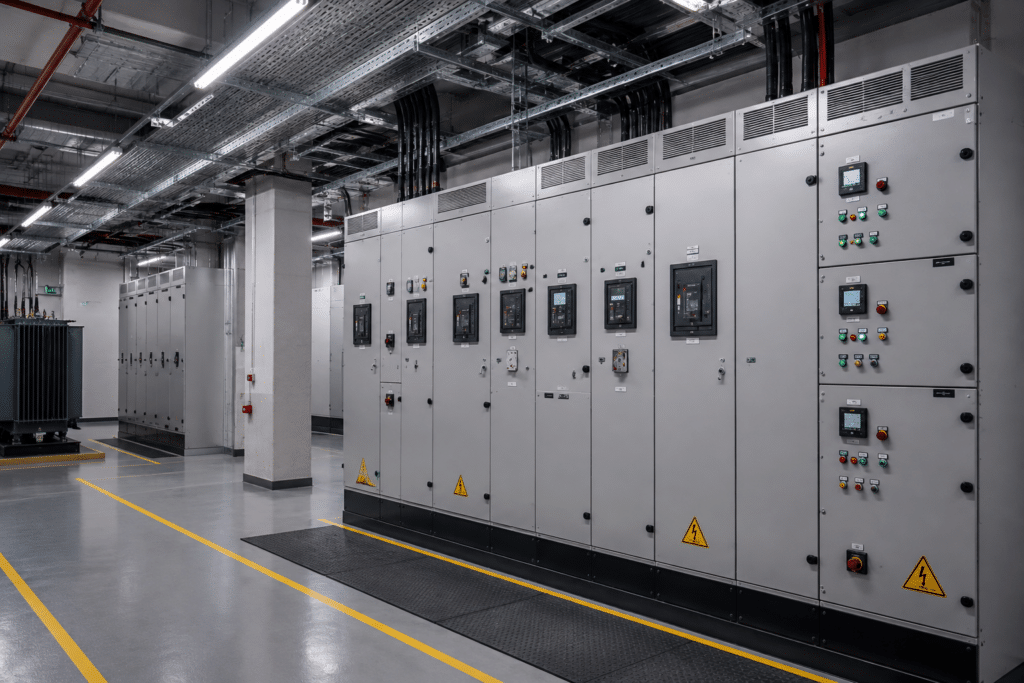
The open-loop ground source heat pump system required integration of abstraction and recharge infrastructure with the wider heating network, electrical infrastructure and controls.
New LTHW boiler plant and distribution needed to operate alongside thermal storage and CHP heat recovery while the transition away from legacy steam systems progressed.
Solar PV introduced a further generation interface together with associated electrical, controls and DNO requirements.
Each technology had its own engineering, procurement, construction and commissioning requirements, but successful project delivery depended upon the individual systems ultimately operating as parts of the same energy infrastructure.
The Project Manager maintained oversight of the interfaces between these packages, coordinating specialist activities with the overall project schedule, construction requirements and operational priorities.
Electrical Infrastructure, G99 & DNO Interfaces
The project incorporated significant electrical infrastructure associated with the new energy systems and on-site generation.
Electrical activities needed to remain aligned with mechanical plant availability, construction sequencing, controls and commissioning requirements.
On-site generation also introduced G99 compliance, DNO interfaces and associated generation-control requirements.
These activities included dependencies outside the immediate construction environment and therefore needed to be incorporated into project planning and commissioning.
Through the Project Manager appointment, Asteria International coordinated these interfaces within the wider project and maintained visibility of their potential impact on system readiness and operational transition.
Project Risk & Health and Safety
Project risk was managed as part of day-to-day delivery.
Technical interfaces, procurement, contractor performance, project change, construction constraints, operational requirements, environmental dependencies and commissioning could each influence the overall project position.
Risks and emerging constraints were considered against their wider consequences, supporting mitigation, prioritisation and recovery where required.
Health and safety remained a core consideration throughout.
The combination of a live healthcare environment, multiple contractors, mechanical and electrical construction activities, new energy infrastructure and interfaces with operational services required active coordination.
Health and safety requirements were incorporated into project planning, construction sequencing, contractor coordination, shutdown arrangements and decision-making rather than being treated as a separate project activity.
Commissioning & System Integration
Commissioning represented a significant stage of the project because completion depended upon considerably more than demonstrating that individual items of plant operated correctly.
New heat generation, LTHW distribution, thermal storage, CHP heat recovery, Solar PV, electrical infrastructure, controls and existing operational systems needed to function within an integrated environment.
The Project Manager coordinated commissioning priorities, contractor interfaces, schedule dependencies, stakeholder requirements and completion activities as the different systems progressed towards operational acceptance.
The commissioning strategy also needed to recognise the staged transition from legacy infrastructure to the new systems.
Particular attention was therefore given to the sequence in which equipment and systems could be tested, proven, connected and brought into operational use.
G99, DNO and generation-control requirements formed part of the wider electrical and commissioning interfaces.
Outstanding works, defects, testing, documentation and handover requirements were incorporated into the project completion process as commissioning progressed.
Practical Completion, Handover & Close-Out
Completion required coordinated management across construction, commissioning, documentation, defects, operational readiness and stakeholder acceptance.
Asteria International supported progression towards Practical Completion through the Project Manager appointment while maintaining visibility of residual activities and their implications for operation and final close-out.
Handover requirements were coordinated between contractors, specialist suppliers, commissioning teams and operational stakeholders to support the transition of completed infrastructure into service.
Residual works, testing, defects and documentation continued to be managed through the post-completion period, maintaining continuity through the final stages of the project.
Project Outcome
The project progressed through multidisciplinary construction, system integration, commissioning and Practical Completion while maintaining the operational requirements of the healthcare facility.
Through a professional services Project Manager appointment, Asteria International provided senior project leadership across Project Management, Commercial Management, Construction Management, Engineering Management and Project Controls & Risk Management, together with procurement, health and safety, commissioning and stakeholder interfaces.
The project demonstrates Asteria International’s ability to coordinate complex infrastructure delivery involving multiple contractors, specialist suppliers and technical disciplines within an operationally constrained environment.
It also demonstrates the value of maintaining visibility across project interfaces.
Technical decisions influenced procurement. Procurement and change affected cost and schedule. Construction sequencing affected operational continuity. Engineering interfaces influenced commissioning, while commissioning determined when new infrastructure could safely transition into operation.
Asteria International’s role was to coordinate these interconnected requirements and provide continuity of project leadership from construction through commissioning, Practical Completion and close-out.
Integrated Healthcare Decarbonisation Delivery
Complex healthcare decarbonisation projects require more than the installation of low-carbon technology.
New infrastructure must be integrated with existing systems, contractors and specialist suppliers need to work within the same project strategy, and construction and commissioning must recognise the requirements of an operational healthcare environment.
This project demonstrates Asteria International’s approach as a specialist project-delivery consultancy, providing experienced project leadership while working alongside client teams, designers, contractors, technology suppliers and operational stakeholders.
The role was not to replace those specialist organisations but to coordinate their activities within the overall project-delivery structure and maintain alignment between what was being engineered, procured, constructed, commissioned and ultimately placed into operation.
Complex Projects. Controlled Delivery.
Asteria International provides experienced project and programme leadership for complex capital projects across demanding operational environments.
Our integrated approach brings together Project Management, Commercial Management, Construction Management, Engineering Management and Project Controls & Risk Management, supporting clients through construction, commissioning, handover and project close-out.