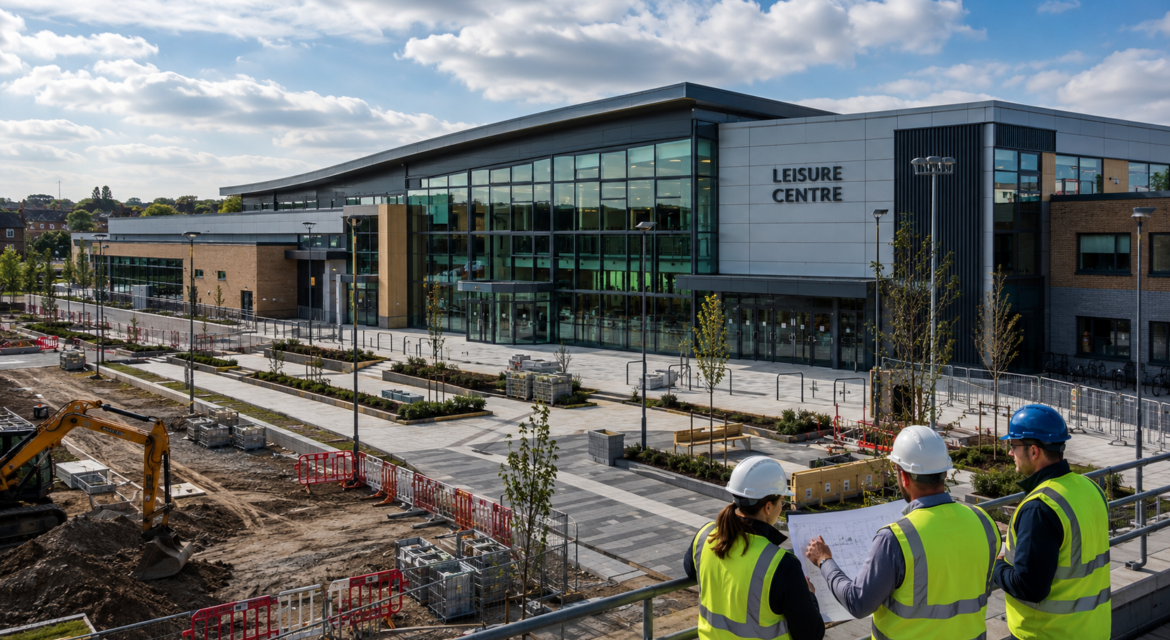
Client-Side Project Management, NEC4 Contract Administration & Commercial Management
Engagement Model: Professional Services – Client-Side Project Management & Advisory
Capital Project: £8.4 Million Public Sector Leisure Centre Modernisation Project
Main Works: Major Building, MEP, Structural & Energy-Efficiency Upgrades
Asteria International Services: Client-Side Project Management | Commercial Management | Construction Management | Engineering Management | Project Controls & Risk Management
Project Overview
Asteria International provided client-side project management, NEC4 contract administration, commercial management and multidisciplinary engineering coordination for the modernisation of an existing public-sector leisure centre.
The £8.4 million capital project incorporated significant upgrades to the existing facility, including complex mechanical and electrical services replacement, structural modifications and energy-efficiency improvements.
Delivery was undertaken within a defined public-sector funding window, creating a direct relationship between successful project completion, programme performance and the client’s ability to protect the available capital funding.
Asteria International integrated with the client team to provide independent oversight of the principal contractor while coordinating the technical, programme, contractual and commercial aspects of project delivery.
The Challenge
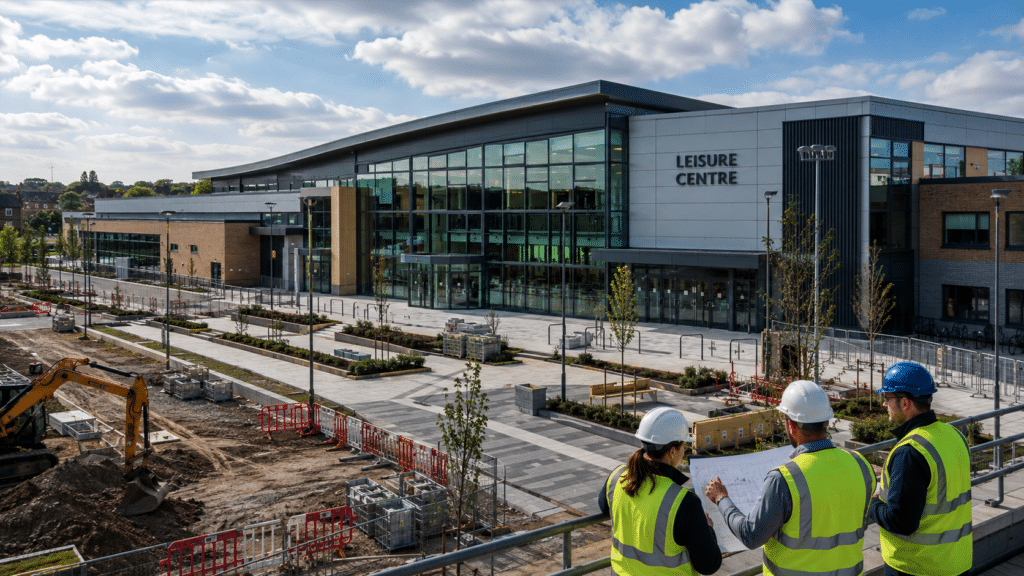
Modernising an existing operational public building created a different set of challenges from those associated with new-build construction.
Existing building conditions, structural interfaces and legacy mechanical and electrical systems needed to be understood and coordinated with the proposed works. Changes arising during delivery could therefore have consequences extending beyond their immediate technical scope.
The client also needed to maintain effective commercial control while operating within a fixed capital funding environment.
Contractor changes and Compensation Events had the potential to progressively consume project contingency if their technical justification, contractual entitlement and commercial value were not properly understood.
Programme performance was equally important.
The project was being delivered against a defined funding deadline, meaning delays could create consequences extending beyond the construction programme itself.
The client therefore required a project management function capable of bringing together technical coordination, programme control, NEC4 administration and commercial assessment.
Asteria International’s Role
Asteria International worked as part of the client-side delivery team, providing management and independent oversight throughout the project.
The scope included:
- Client-side project management
- NEC4 contract administration
- Commercial and change management
- Compensation Event assessment and negotiation
- Early Warning and project risk management
- Independent master programme development
- Principal contractor programme review
- Mechanical and electrical engineering coordination
- Structural and architectural interface management
- Construction progress monitoring
- Stakeholder coordination
- Progress and commercial reporting
This integrated role allowed technical, programme and commercial issues to be considered together rather than being managed through separate and potentially disconnected project functions.
Independent Programme Control
Asteria International developed and maintained an independent, logic-linked master programme using Microsoft Project.
The programme provided the client with its own assessment of project sequencing, dependencies, critical activities and progress against the required completion position.
Principal contractor programme information could therefore be reviewed against an independent client-side baseline.
Regular programme reviews examined developing critical-path activities and emerging constraints, allowing potential delays and sequencing issues to be identified and addressed before they materially affected the required completion date.
This independent programme position was particularly important because completion was linked to the client’s external funding requirements.
Programme management was therefore not simply a reporting exercise. It formed an important part of protecting the client’s wider project and funding position.
NEC4 Early Warning & Risk Management
The NEC4 Early Warning process was actively managed throughout delivery.
Emerging risks were identified and considered against their potential technical, programme and commercial consequences, allowing mitigation options to be developed while opportunities remained available to influence the outcome.
Risk reduction discussions brought together the appropriate client, contractor and technical stakeholders to understand the issue and determine appropriate actions.
Where risks could be mitigated, the objective was to prevent or minimise their impact on the project.
Where circumstances subsequently resulted in contractual change, the existing technical and programme understanding provided a stronger basis from which the resulting Compensation Event could be assessed.
This created a structured relationship between project risk management, programme control and contractual change.
Compensation Event & Commercial Management
Commercial change represented a significant area of Asteria International’s involvement.
Contractor-submitted Compensation Events were assessed against the underlying technical requirement, contractual position, actual construction progress, programme implications and supporting commercial information.
The objective was not simply to negotiate contractor quotations downwards.
Asteria International first sought to establish the reason for the change, the scope genuinely required, its effect on the project and the appropriate commercial consequence.
This allowed the client to distinguish between legitimate project change and costs that required further justification or challenge.
Across the project, contractor Compensation Event submissions totalled approximately £410,000.
Following technical review, commercial assessment and negotiation, the final agreed value was approximately £145,000.
The resulting difference of approximately £265,000 demonstrates the importance of informed client-side commercial management and independent assessment of change on a major capital project.
Engineering & Design Coordination
The modernisation works incorporated structural, architectural and complex mechanical and electrical interfaces within an existing facility.
Asteria International coordinated these multidisciplinary requirements as part of the wider project management function.
Design information was reviewed in the context of construction requirements, existing building constraints and interfaces between individual work packages.
Potential design clashes and coordination issues were identified and addressed through the project team before they could unnecessarily disrupt construction activities.
The engineering capability within the project management function was particularly valuable when assessing change.
Rather than considering a Compensation Event purely as a commercial submission, Asteria International could examine the underlying engineering requirement and understand whether the proposed scope and associated costs reflected what was actually required by the project.
Connecting Technical Change with Commercial Control
Asteria International’s role provided the client with a direct connection between engineering decisions and their programme and commercial consequences.
When a change emerged, the project team could consider:
What has technically changed?
Why is the change required?
Could the impact be mitigated?
What does it mean for the construction programme?
Does it constitute a Compensation Event?
What represents an appropriate commercial assessment?
This approach reduced the risk of individual technical decisions progressing independently of their wider project consequences.
It also provided the client with a clearer evidence base from which to make decisions regarding change, expenditure and programme.
Protecting the Funding Position
Programme certainty had particular importance because the project was being delivered within a defined public-sector funding window.
Asteria International therefore maintained close oversight of the relationship between construction progress, critical activities and the required project completion position.
The independent master programme provided visibility of emerging constraints while allowing contractor programme information to be reviewed against the client’s wider requirements.
The original contract baseline identified a 42-week delivery period.
The project subsequently achieved completion in approximately 39 weeks – three weeks ahead of the stated contract baseline.
Achieving the required completion position protected the client’s ability to utilise the available capital funding while providing greater certainty around project completion and operational transition.
Protecting Client Value
The combination of engineering understanding, NEC4 contract administration, programme control and commercial management provided the client with independent oversight of both project delivery and developing expenditure.
Asteria International’s commercial role was supported by direct understanding of the underlying technical work and actual construction progress.
This was particularly important when assessing contractor change.
Rather than treating commercial submissions in isolation, their technical justification and programme consequences could be examined before the appropriate commercial position was established.
Across approximately £410,000 of contractor-submitted Compensation Events, this process resulted in approximately £145,000 of agreed change, representing approximately £265,000 of cost avoidance against the values originally submitted.
The outcome demonstrates how proportionate client-side professional support can materially strengthen commercial control across a significantly larger capital investment.
Project Outcomes
Asteria International provided an integrated client-side delivery function across project management, engineering coordination, programme control, risk and commercial management.
Key project outcomes included:
- £8.4 million capital project managed within a defined public-sector funding environment
- Independent client-side master programme developed and maintained using Microsoft Project
- NEC4 Early Warning and risk reduction processes actively managed throughout project delivery
- Contractor Compensation Events independently assessed against technical, programme and commercial requirements
- Approximately £410,000 of submitted Compensation Events reviewed and assessed
- Approximately £145,000 of change ultimately agreed
- Approximately £265,000 difference between submitted and agreed Compensation Event values
- Complex mechanical, electrical, structural and architectural interfaces coordinated through the client-side project management function
- 42-week contract baseline achieved in approximately 39 weeks
- Required project completion achieved within the client’s public-sector funding window
The project demonstrated that effective client-side management is not simply an additional layer of project administration.
By combining technical understanding with independent programme control, NEC4 contract administration and commercial management, Asteria International provided the client with an informed position from which project risk, contractor change, expenditure and delivery performance could be actively managed.
Conclusion
Complex public-sector refurbishment projects require careful coordination of existing assets, new engineering systems, construction activities, contractual change and fixed funding requirements.
Asteria International integrated these requirements within a single client-side project management function.
Independent programme control provided visibility of delivery performance. Engineering coordination supported informed technical decisions. NEC4 processes provided a structured mechanism for managing emerging risk and change. Commercial assessment ensured that the financial consequences of those changes were properly understood and challenged where appropriate.
The project ultimately demonstrates the value of combining project management, engineering understanding, project controls and commercial management within an experienced client-side delivery team.
For the client, this provided more than additional project resource: it provided independent oversight and informed control of a complex £8.4 million capital investment.